

It is no secret that Russia has been rapidly expanding its UAV capabilities, improving existing systems while developing new ones. Significant resources are also being invested in establishing training centers to prepare personnel who will assemble, maintain, and operate unmanned aerial vehicles. However, in the author’s view, one important thing has received relatively little attention: over the past several years, Russia has begun systematically introducing UAV education into its school system.
This article examines all official UAV-related educational programs that have been incorporated into the Russian school program. These are state-developed or state-supported programs implemented through the country’s formal school education system.
This study does not cover extracurricular clubs, commercial or free courses offered outside the school system, nor does it examine UAV-related programs at colleges or universities. Those constitute a separate area of research. Instead, the focus here is exclusively on classroom and school-based extracurricular programs delivered directly by general education schools.
To better understand the foundation of the system that has been integrated into Russian education, we will begin with the fundamentals, moving from the general framework to specific programs.
State Development Program
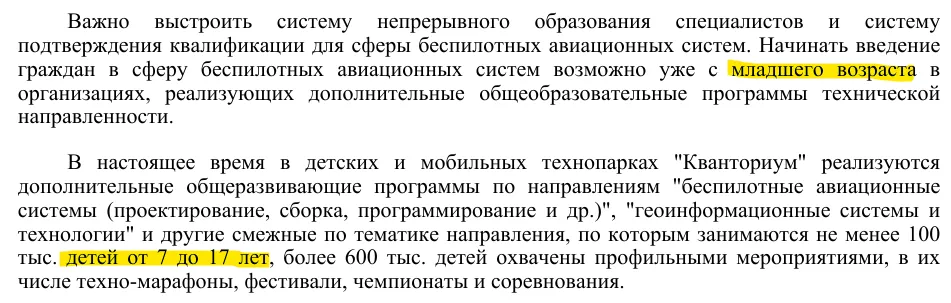
On June 21, 2023, the Government of the Russian Federation adopted Order No. 1630-r, approving the “Strategy for the Development of Unmanned Aviation in the Russian Federation through 2030 and for the Outlook to 2035.” This serves as the country’s primary strategic document for the development of the UAV sector.
In addition to outlining the key stages and priorities for advancing the industry, the strategy calls for the “creation of a continuous education and workforce development system to provide the unmanned aviation sector with qualified specialists.” Notably, the strategy places particular emphasis on children, identifying them as the starting point of this continuous education pipeline and the foundation for developing the future UAV workforce.
Download full document
Стратегия_БпЛА.pdf
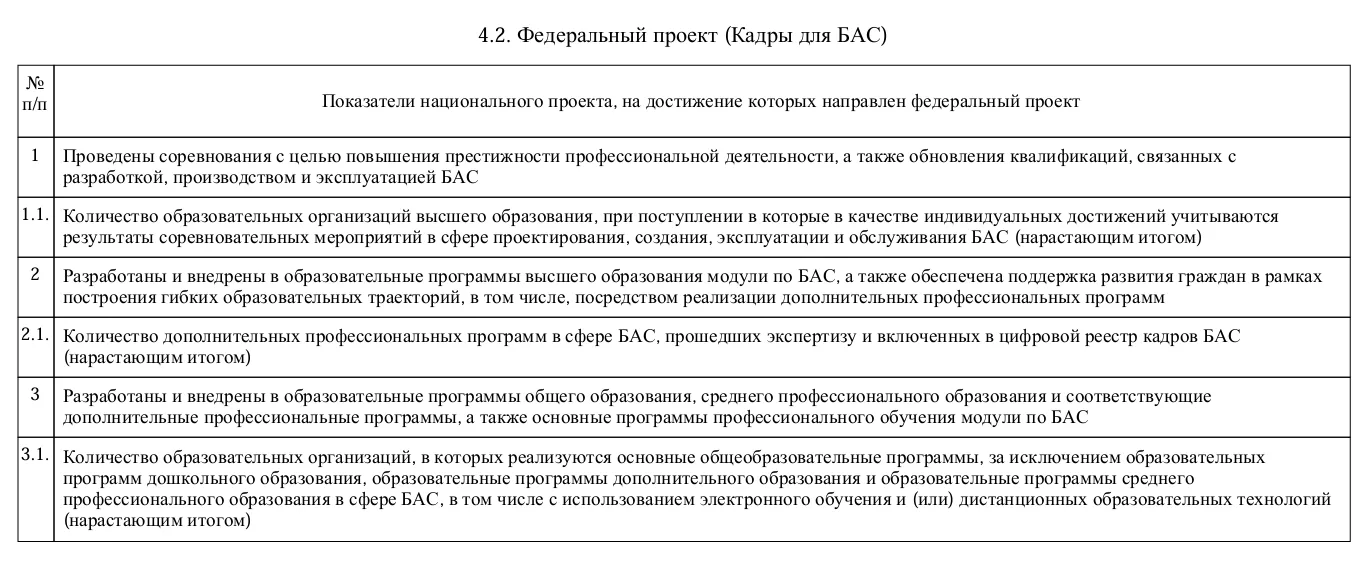
To implement the above strategy, Russia launched the national project “Unmanned Aviation Systems” (UAS) in January 2024. The initiative consists of several federal projects, one of which is “Workforce Development for Unmanned Aviation Systems.” This federal project is specifically aimed at building the human capital required to support the country’s expanding UAV sector.
Download full document
FP_Kadry_dlya_BAS.pdf
According to official information, the “Workforce Development for Unmanned Aviation Systems” project is designed to:
- Establish a unified workforce training system.
- Create a continuous education pathway for specialists in the unmanned aviation sector, beginning in secondary schools and continuing through colleges.
- Deliver training through hands-on practical training centers in cooperation with prospective employers, promoting early career guidance and professional specialization.
- Develop and implement dedicated educational modules.
- Create and integrate digital educational content into the learning process in order to modernize curricula and improve the quality of education in the field of unmanned aviation systems (UAS).
This article does not examine every aspect of the broader UAS development strategy outlined in these documents. Instead, it focuses specifically on the school education component. Therefore, the following sections analyze the documents that directly govern UAV-related education in Russian schools.
To fully appreciate the scope and objectives of this initiative, it is important to understand that these documents do not merely propose the creation of a training system. Rather, they describe an ongoing, systematic effort to integrate unmanned aviation systems into the education system, beginning in primary school and continuing through vocational colleges and other post-secondary educational institutions.
The program encompasses a broad range of disciplines, including the manufacture and assembly of UAV components, programming, flight operations, maintenance, and the processing and analysis of photo and video data collected by unmanned systems.
For example, beyond expanding the number of teachers and educational institutions participating in the program, the federal “Workforce Development for Unmanned Aviation Systems” project also calls for increasing the number of higher education institutions that award admissions advantages to applicants based on prior participation in competitions and educational activities related to the design, operation, and maintenance of unmanned aviation systems.
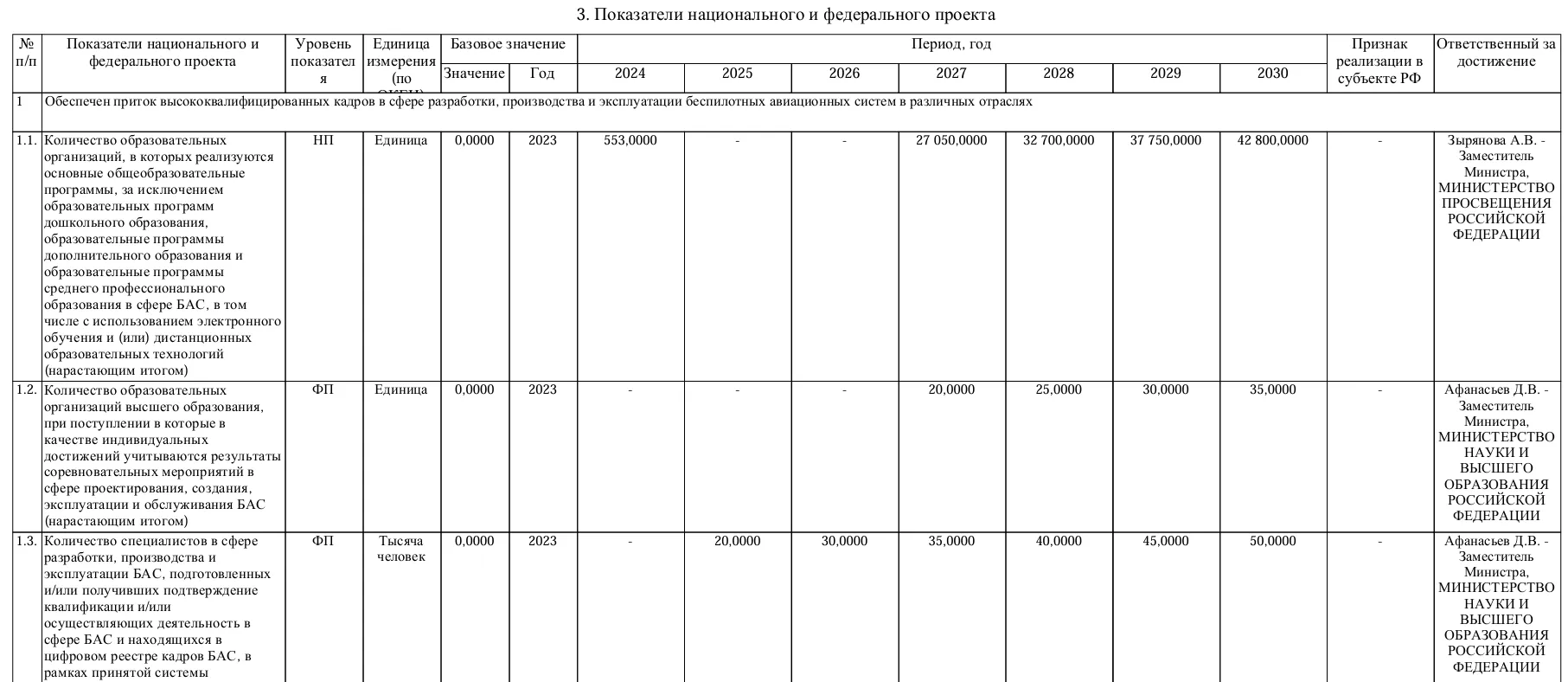
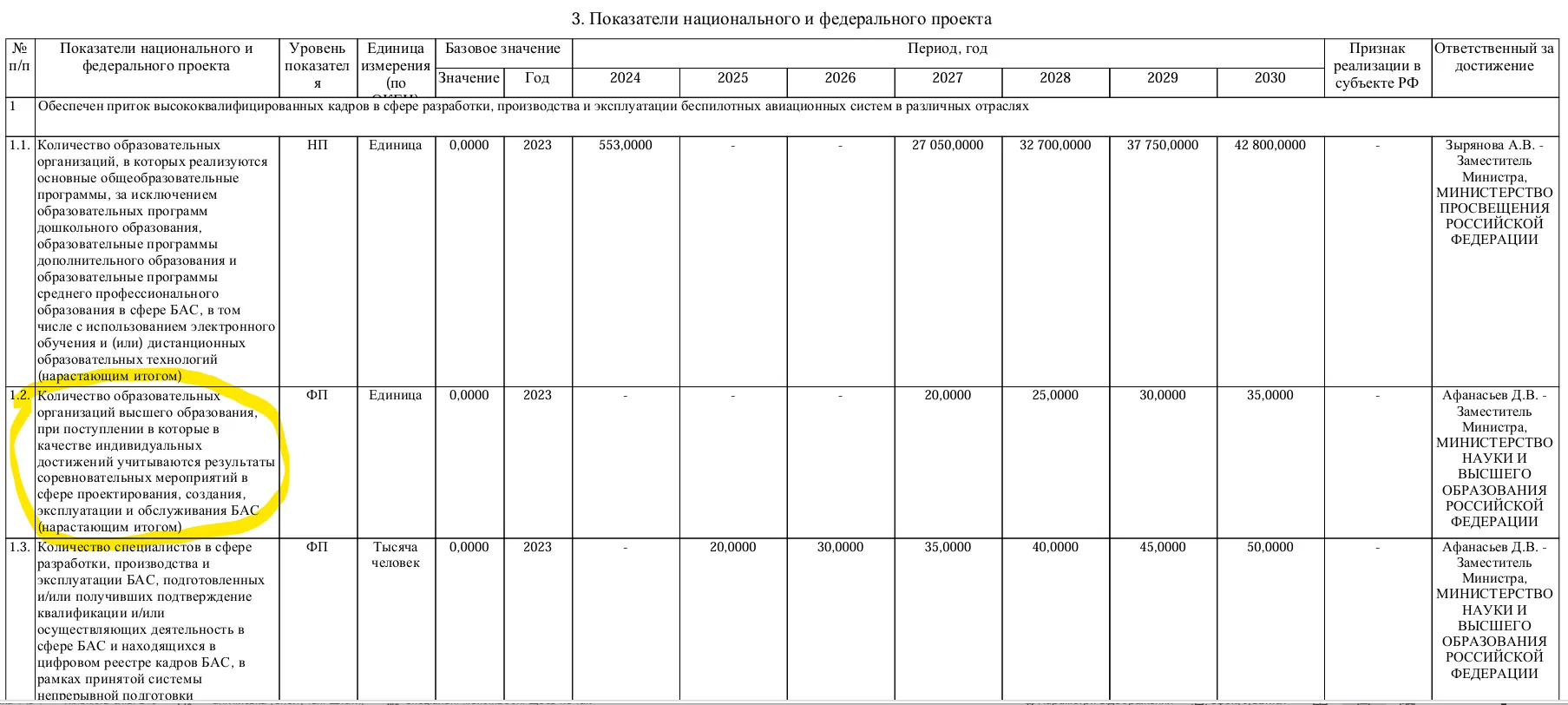
This is just one example of how the Russian education system incentivizes students to engage with the unmanned aviation sector from an early age.
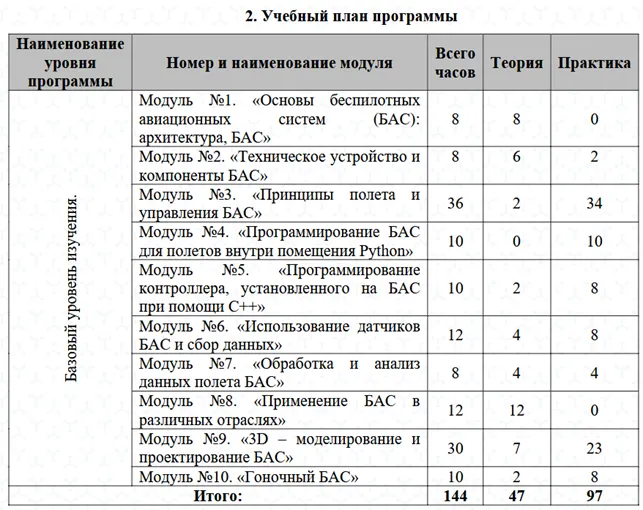
To support the implementation of the federal “Workforce Development for Unmanned Aviation Systems” project, the Russian government developed methodological guidelines titled:
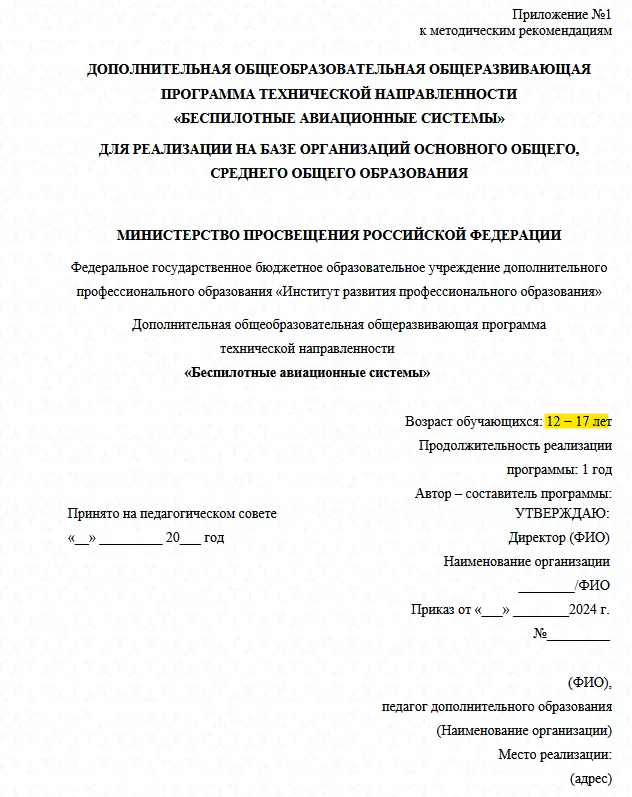
“Methodology for Developing Supplementary General Education Programs for Basic General Education Schools, Upper Secondary Schools, and Institutions Providing Secondary Vocational Education within the Framework of the Federal Project ‘Workforce Development for Unmanned Aviation Systems.’”
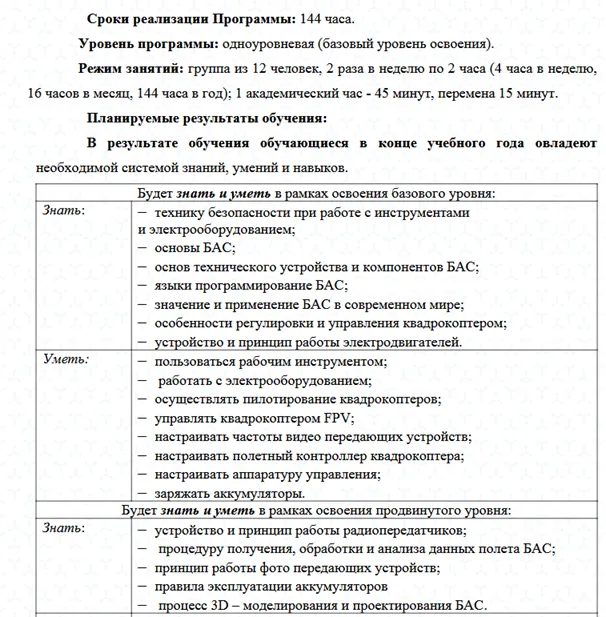
This document establishes the framework for educational institutions to develop the program they will use to teach UAV-related subjects and courses beginning in the 8th grade. It serves as the foundational methodological document for UAV education programs in Russian schools.
The guidelines are highly detailed, covering everything from requirements for the formatting of the document’s title page to the structure and content of individual lessons delivered to students.
Download full document
metodrecomend.pdf
Based on these methodological guidelines, educational institutions then develop and formally approve their own instructional programs for UAV-related subjects and courses (examples are provided later in this article).
At this point, we have examined the overarching framework of Russia’s UAS development strategy, the foundation of its educational programs, and gained an understanding of the scale of the Russian government’s commitment to developing the educational component of the unmanned aviation sector.
We can now move from policy to implementation by examining how these programs are being put into practice within Russia’s general school education system.
Fundamentals of Security and Homeland Defense
Let’s begin with the principal school subject through which UAV-related training is delivered: “Fundamentals of Security and Homeland Defense.”
Under Order No. 1028 of the Ministry of Education of the Russian Federation, issued on December 27, 2023, titled “On Amendments to Certain Orders of the Ministry of Education and Science of the Russian Federation and the Ministry of Education of the Russian Federation Concerning the Federal State Educational Standards for Basic General Education and Upper Secondary Education,” a new compulsory subject, “Fundamentals of Security and Homeland Defense,” was introduced effective September 1, 2024.
The subject is mandatory for students in Grades 8–9 and 10–11, with approximately one lesson per week (around 68 instructional hours per academic year). For Grades 5–7, schools may include the subject in the curriculum at their discretion, either as part of the flexible component of the curriculum or as an extracurricular program, with up to 102 instructional hours per academic year.
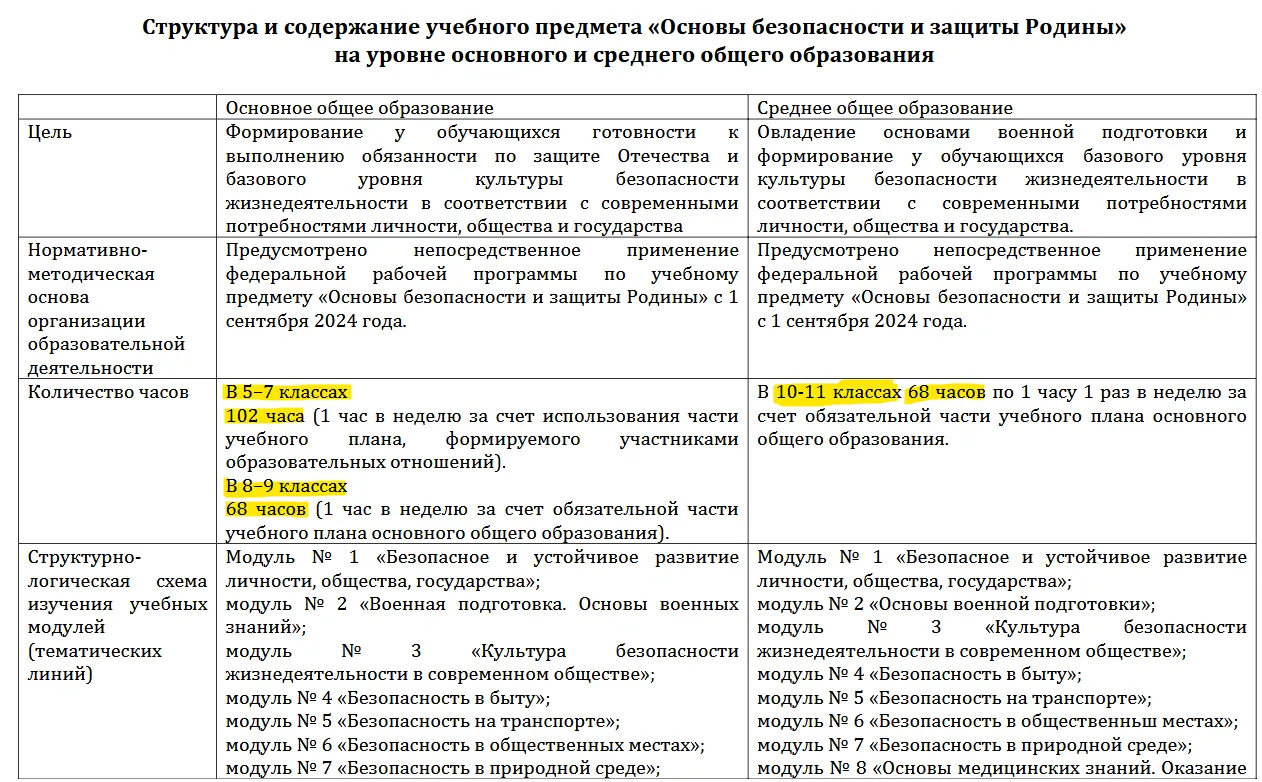
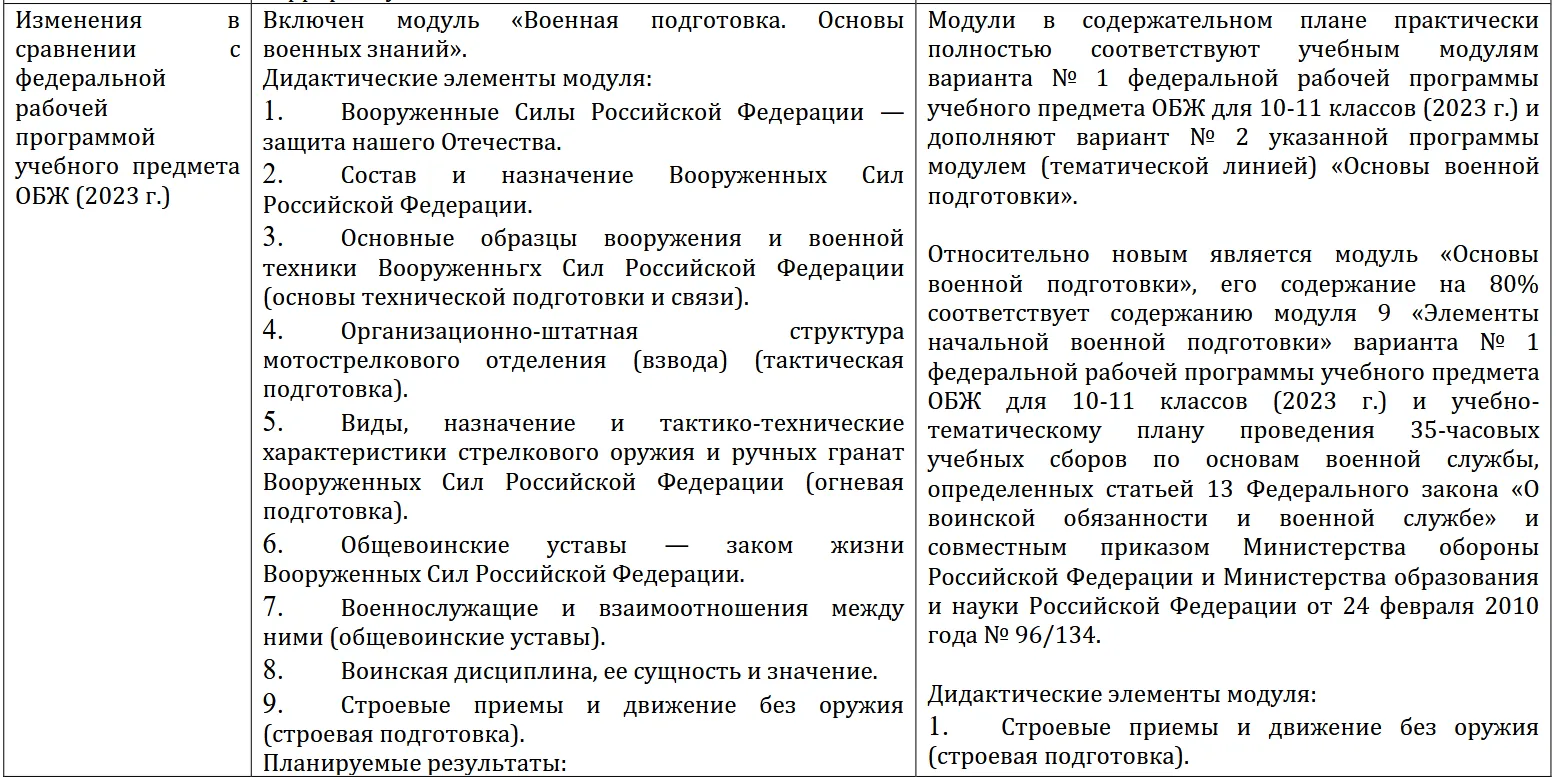
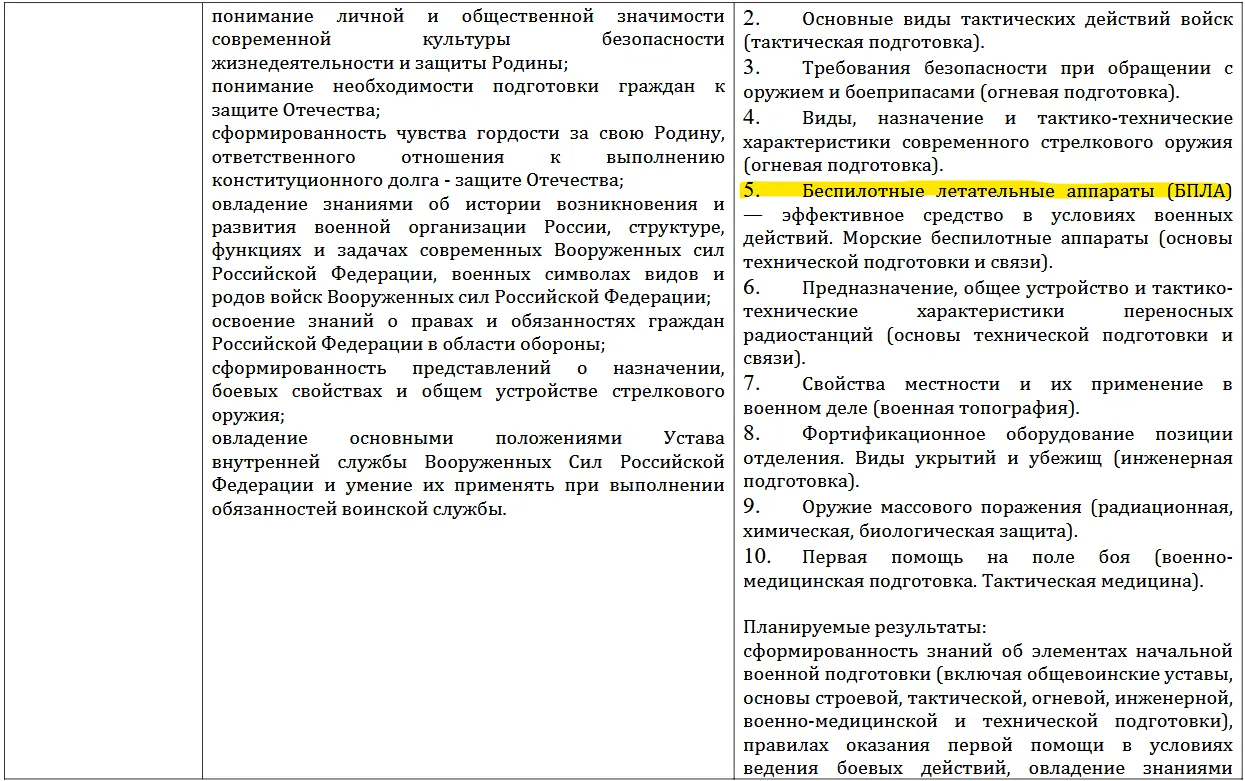
To support the introduction of this new subject into the school curriculum, the Ministry of Education developed and approved the “Methodological Guidelines for the Implementation of the Subject ‘Fundamentals of Security and Homeland Defense’”.
The excerpt below illustrates how UAV-related instruction has been incorporated into the curriculum as part of the “Military Training: Fundamentals of Military Knowledge” module.
Download full document
Metodicheskie_rekomendatsii_OBZR.pdf
The following is an example of a specific instructional program developed on the basis of the methodological guidelines described above. In most schools, the UAV module is incorporated into the curriculum beginning in Grade 10.
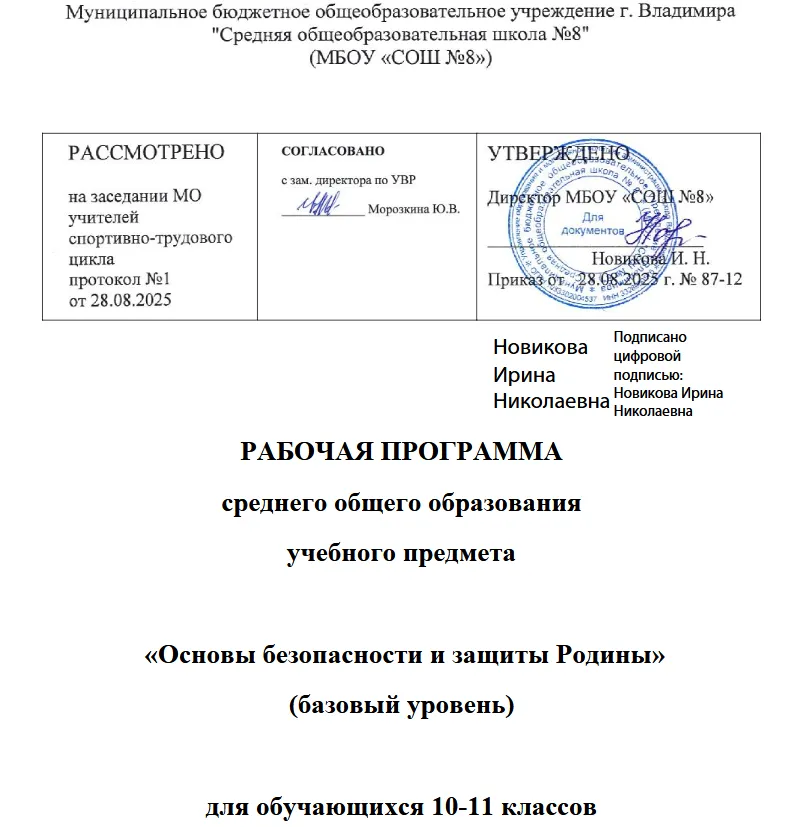
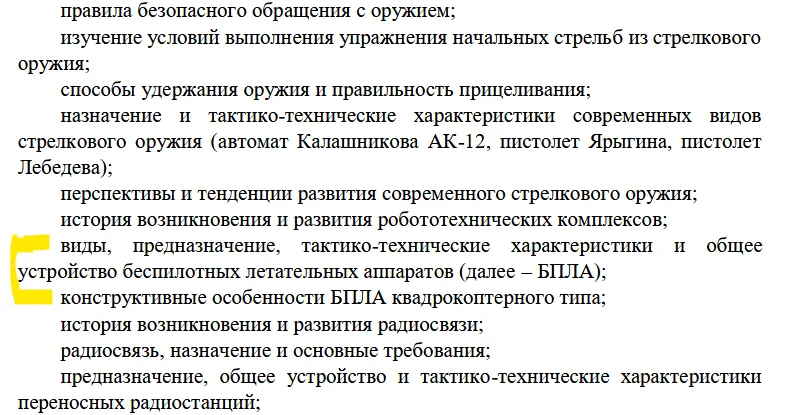
Download full document
ОБЗР_10кл_Владимир.pdf
It should be noted that not all schools follow the methodological guidelines for the “Fundamentals of Security and Homeland Defense” subject as a strict standard. As a result, some schools do not include the UAV module in their instructional programs for Grades 8–9. In many cases, however, this is offset by dedicated UAV courses devoted entirely to unmanned aviation, which will be examined in the following sections.
Beginning in September 2026, “Fundamentals of Security and Homeland Defense” will no longer be taught as a single integrated subject. The Ministry of Education of the Russian Federation has introduced a new curriculum that replaces the existing modular course with two separate subjects, each comprising 34 instructional hours:
Initial Military Training
Life Safety
Students in Grade 10 will complete the full Initial Military Training course (34 hours), while Grade 11 students will study Life Safety (34 hours).
The Initial Military Training course includes military discipline, tactical medicine and first aid, procedures for responding to terrorist threats, and measures for countering extremism.
The Life Safety course covers road safety, emergency response procedures, online safety, contacting emergency services, and disease prevention.
The following is an example of an instructional program for the Initial Military Training course.
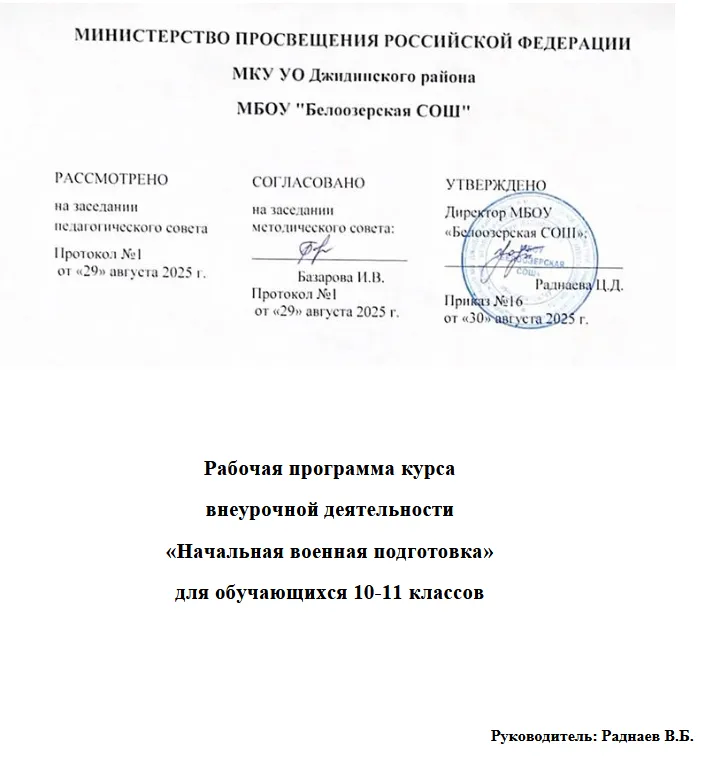
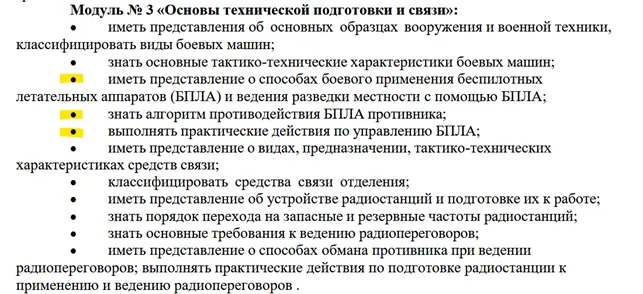
Download full document
RP_po_NVP_10_11_kl.pdf
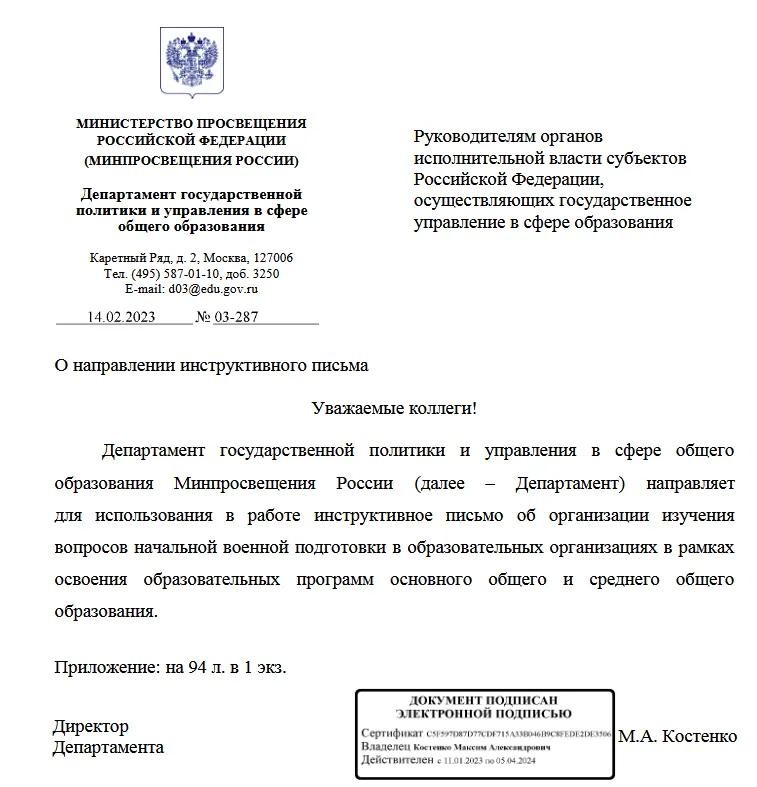
In addition to classroom instruction, the Ministry of Education of the Russian Federation issued Letter No. 03-287 of February 14, 2023, “On the Distribution of an Instructional Letter” (regarding the organization of initial military training within the implementation of basic and upper secondary education programs).
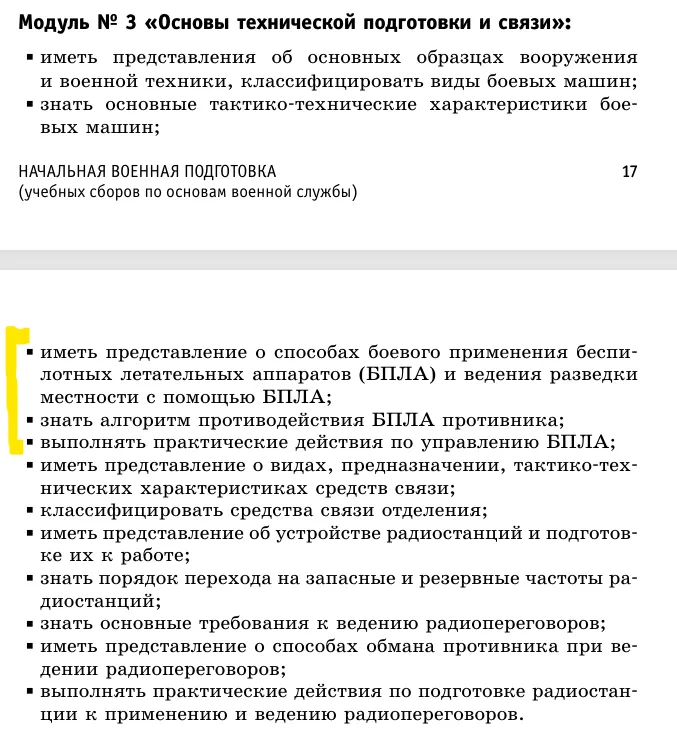
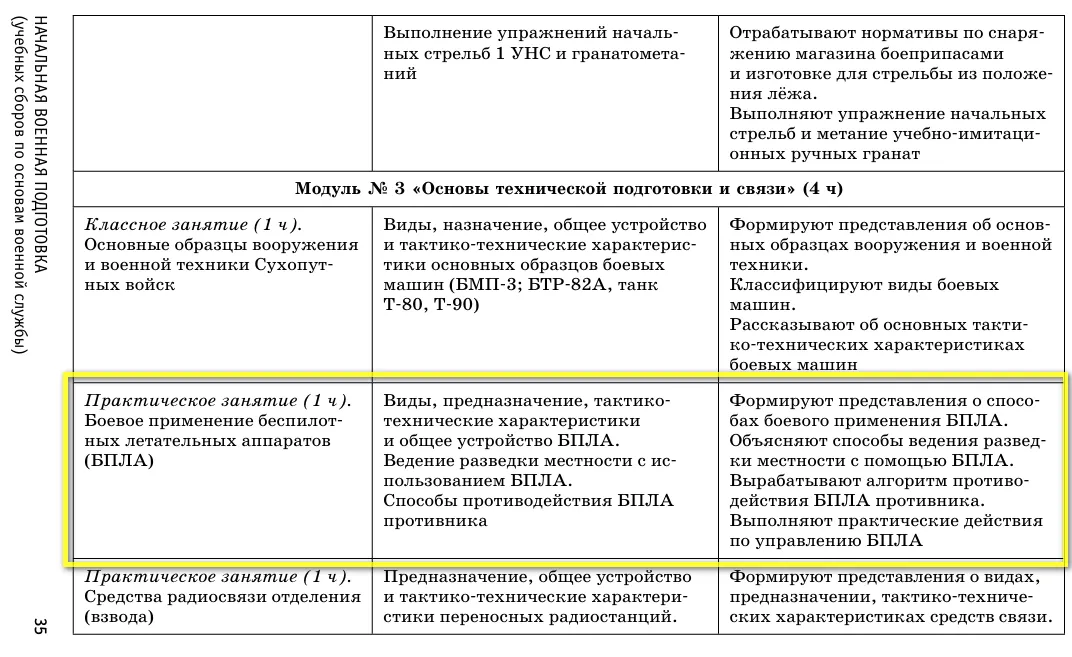
The letter instructs educational institutions to conduct initial military training camps as part of the school program. These training camps include practical instruction in a number of military-related subjects, including unmanned aerial vehicles (UAVs).
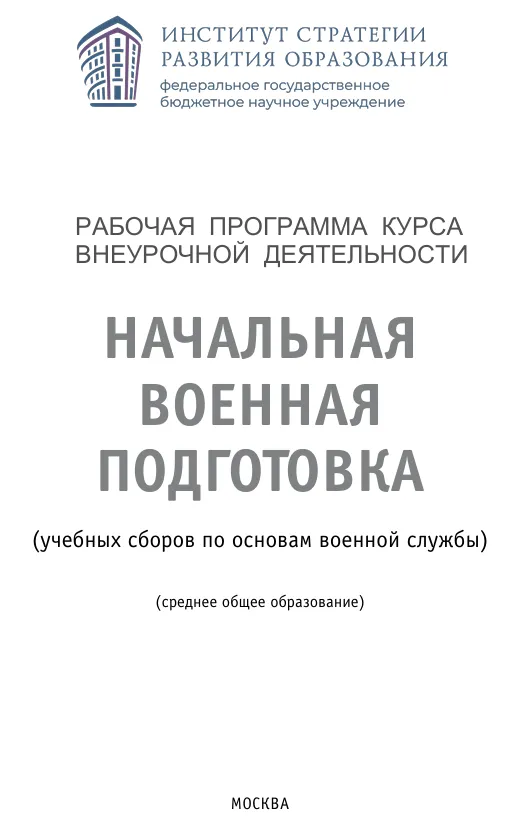
The following is an example of the initial military training camp program for Grade 10 students.
Download full document
ВУД_РП_НВП_10-11-кл_Новая.pdf
Summary: “Fundamentals of Security and Homeland Defense” and “Initial Military Training” in the Context of UAV Education
Until 2026, the fundamentals of UAVs were taught as a compulsory component of “Fundamentals of Security and Homeland Defense” beginning in Grade 8, with the option for schools to introduce the subject as early as Grade 5 where curriculum time permitted. Although the material was introductory in nature, it provided students with a basic understanding of unmanned aerial vehicles, their capabilities, and their applications.
Beginning in September 2026, “Fundamentals of Security and Homeland Defense” is being replaced by two separate subjects: “Initial Military Training” and “Life Safety.” Both are taught starting in Grade 10, with UAV-related instruction incorporated into Initial Military Training in greater depth than under the previous curriculum. In addition, the program includes mandatory training camps that provide students with practical experience in UAV operation and piloting.
Does this mean that younger students will no longer study UAVs in school? Not at all. In fact, this is where the broader picture of Russia’s school-based UAV education system begins to emerge.
Technology (School Subject)
Under Order No. 62 of the Ministry of Education of the Russian Federation, issued on February 1, 2024, “On Amendments to Certain Orders of the Ministry of Education and Science of the Russian Federation Concerning the Federal Educational Programs for Basic General Education and Upper Secondary Education,” the federal instructional program for the subject Technology was revised.
Specifically, the “Robotics” module was expanded to include topics on unmanned aviation systems (UAS), covering their design, programming, and operation.
To support the implementation of these amendments, the Ministry subsequently developed methodological guidelines for teaching the updated program:
According to these guidelines, students are expected to acquire the following knowledge and skills:
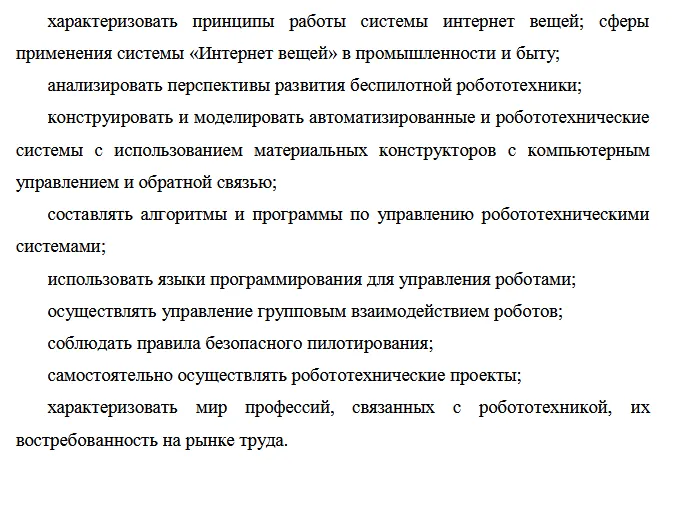
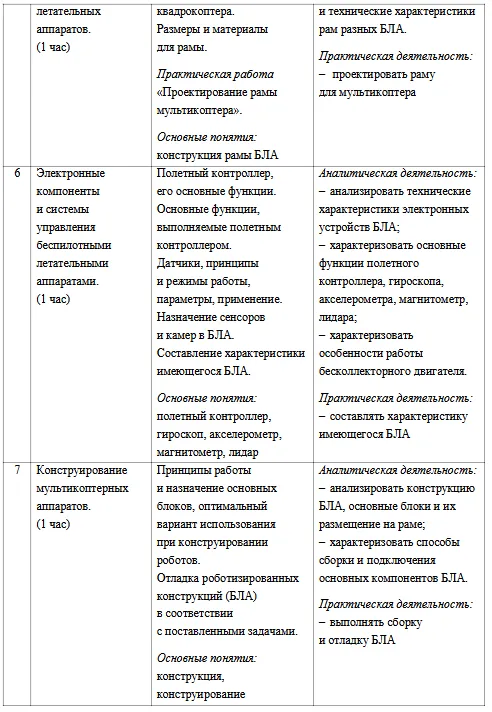
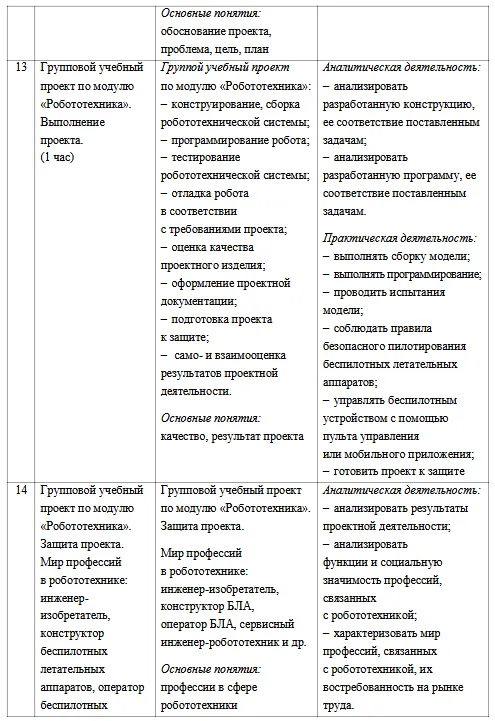
Download full document
mr_robototehnika_2024.pdf
Introduction to UAVs begins in Grade 7, while the curricula for Grades 8 and 9 are directly and extensively connected with unmanned aerial systems.
Therefore, within the Technology subject, students study:
- The history of unmanned aviation development.
- Fundamentals of aerodynamics - why drones fly and what forces act on them.
- UAV structure and components - the main elements of a drone, including the frame, motors, batteries, control systems, and sensors.
- Flight control principles - how controllers operate and what flight modes are available.
- Practical training - students first develop skills using simulators, then assemble educational drones (often using training platforms such as Geoscan Pioneer or Zhuzha 3.0 educational kits), and only after that proceed to real flight operations.
- Areas of application - military use, agriculture (field monitoring and crop treatment), logistics (cargo delivery), construction, search and rescue operations, aerial photography, and video production.
- Programming - in Grade 9, the curriculum becomes more advanced: students learn to develop algorithms and write code (for example, in Python) for autonomous flight tasks.
- Professional pathways - students explore emerging careers in the UAV sector and the skills required for these professions.
Allocation of instructional hours:
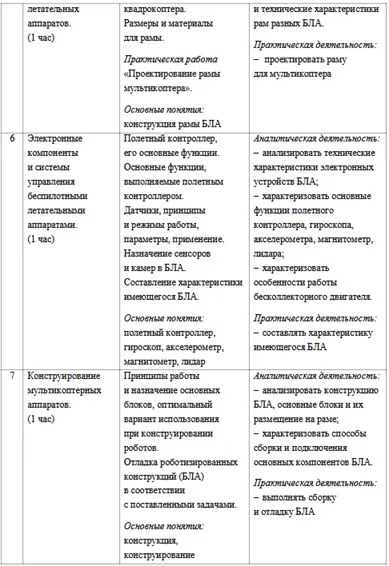
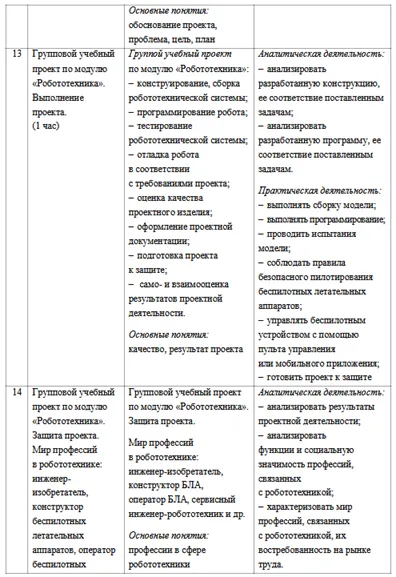
In Grade 8, the topic “Unmanned Aerial Vehicles” receives approximately one lesson (two academic hours) within the “Robotics” module.
In Grade 9, significantly more time is allocated: 34 instructional hours (one hour per week) are dedicated to UAV design, programming, and operation.
The following is an excerpt from the Grade 8 curriculum (the program is approved for Grades 5–9):
Download full document
20_frp_trud_tehnologiya_5_9_klassy_itog_na_sajt.pdf
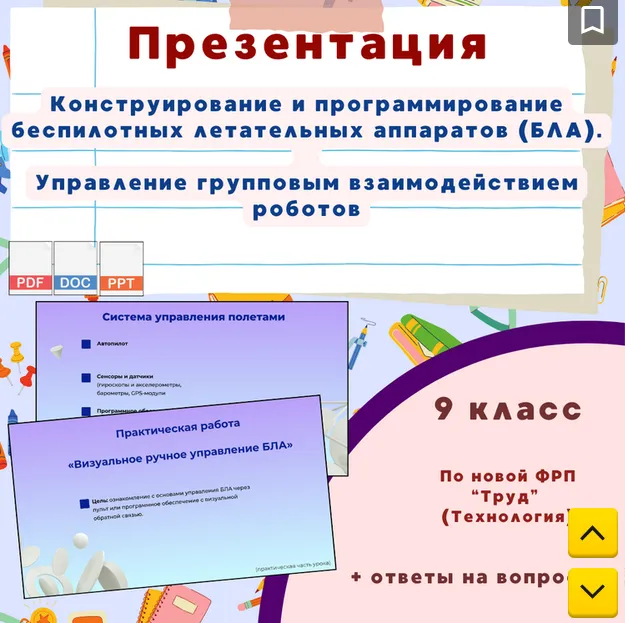
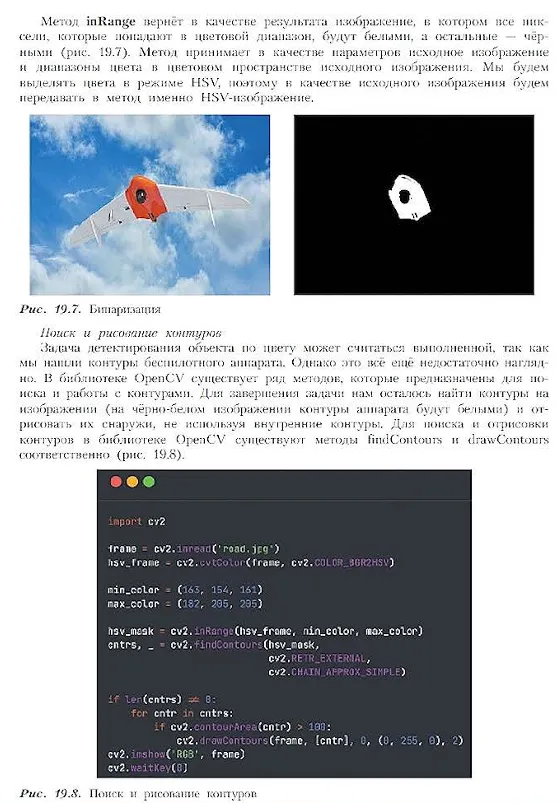
An example of a Grade 9 lesson presentation:


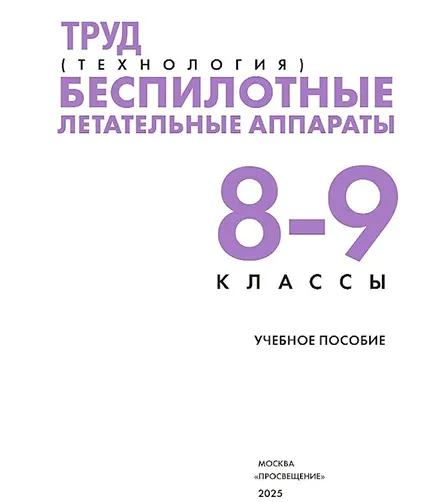
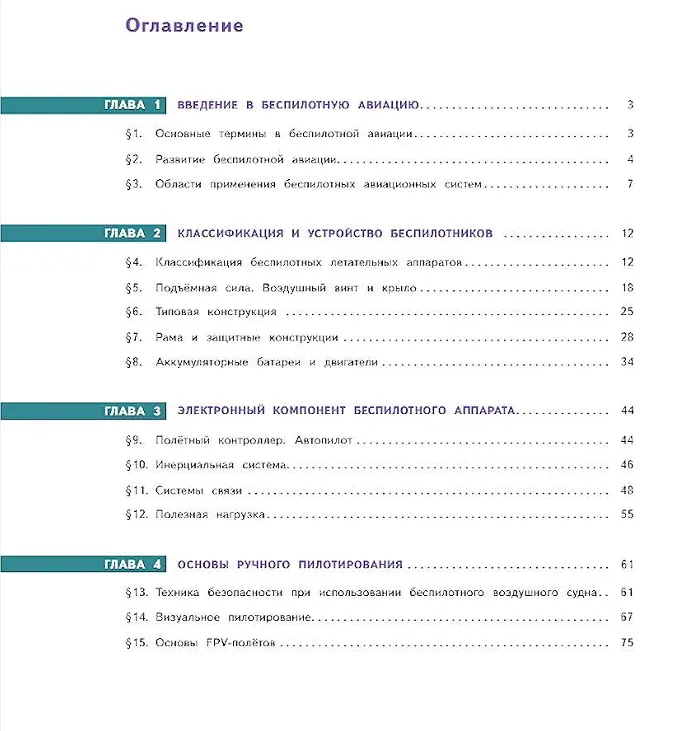
In addition, a dedicated textbook titled “Unmanned Aerial Vehicles. Grades 8–9” was developed and included in the federal list of approved educational materials.
Download full document
Луцкий МВ Труд технология БПЛА 2025.pdf
Additional School Programs
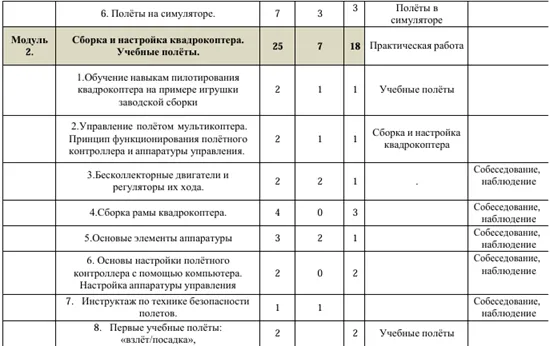
In addition to the standard “Technology: Robotics” program, schools may independently introduce specialized UAV-related courses.
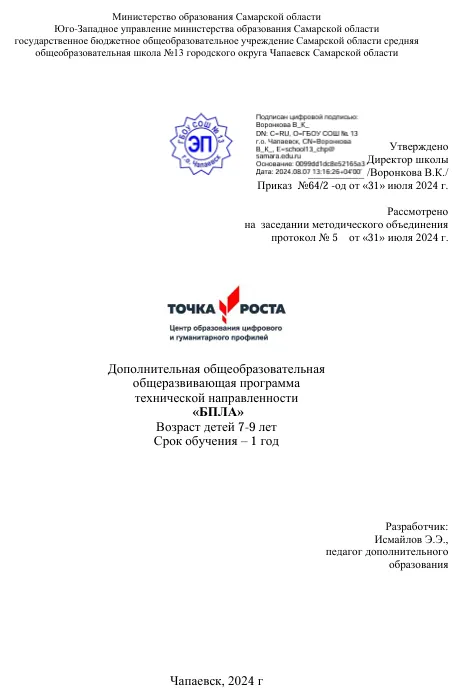
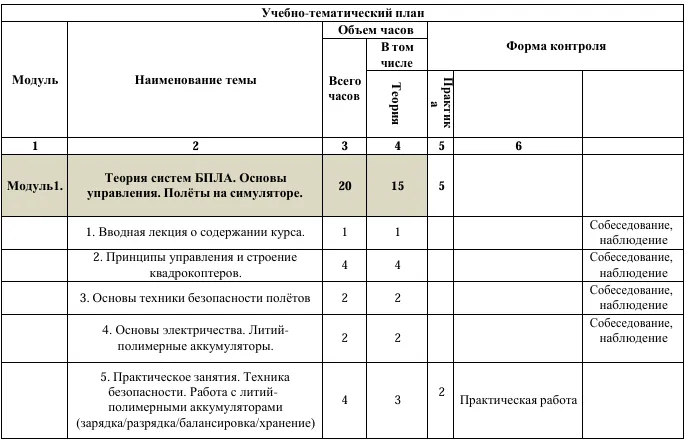
For example, there is an additional educational program titled “UAVs” designed for children aged 7–9 years old (!!!).
Download full document
БПЛА_.pdf
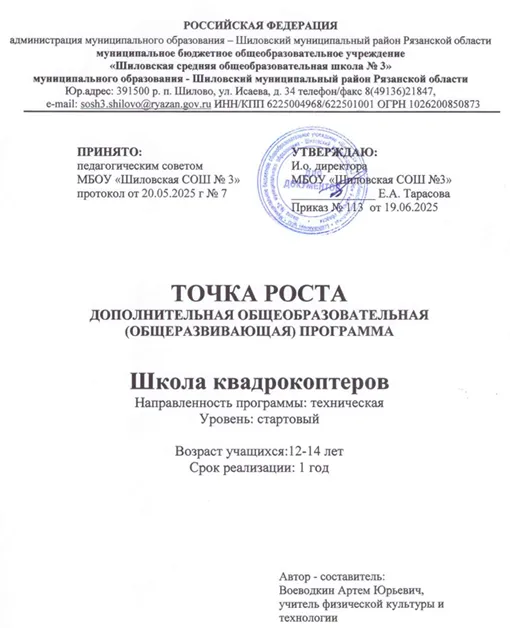
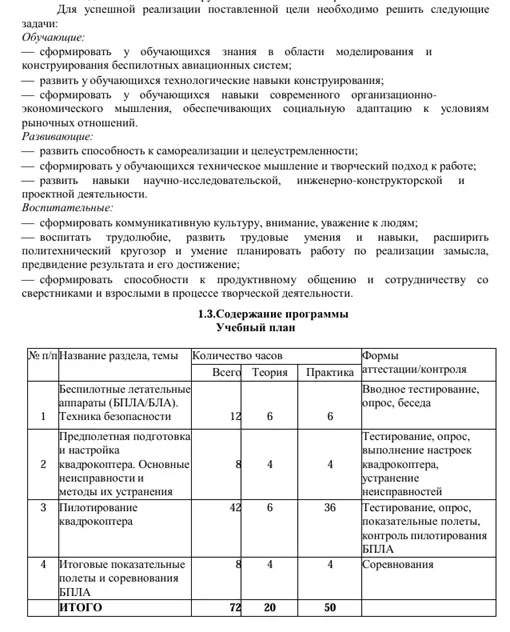
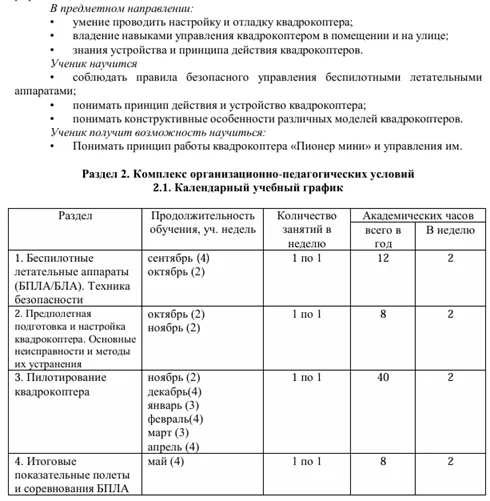
The “Quadcopter School” course for students in Grades 5–7:
Download full document
Tochka_rosta._Rabochaya_programma_Shkola_kvadrokopterov._5_7_klassy.pdf
Or, for example, the “Program and Fly” course for students in Grades 5–8:
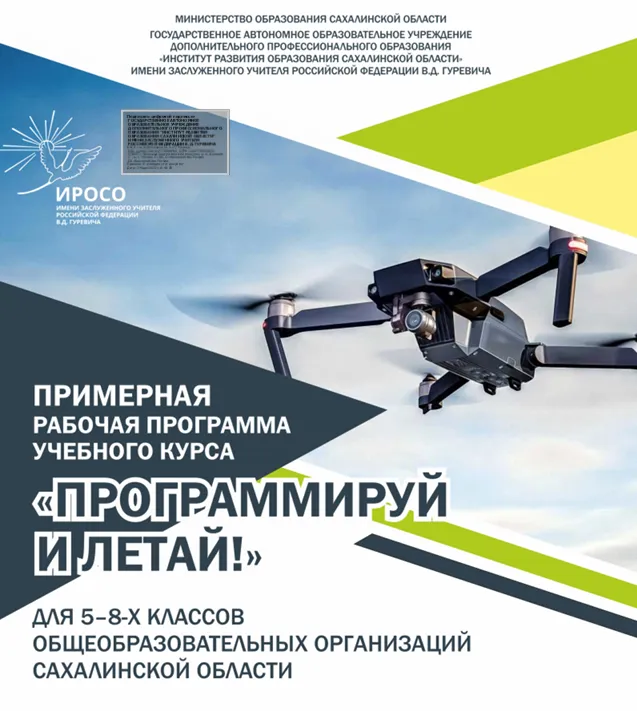
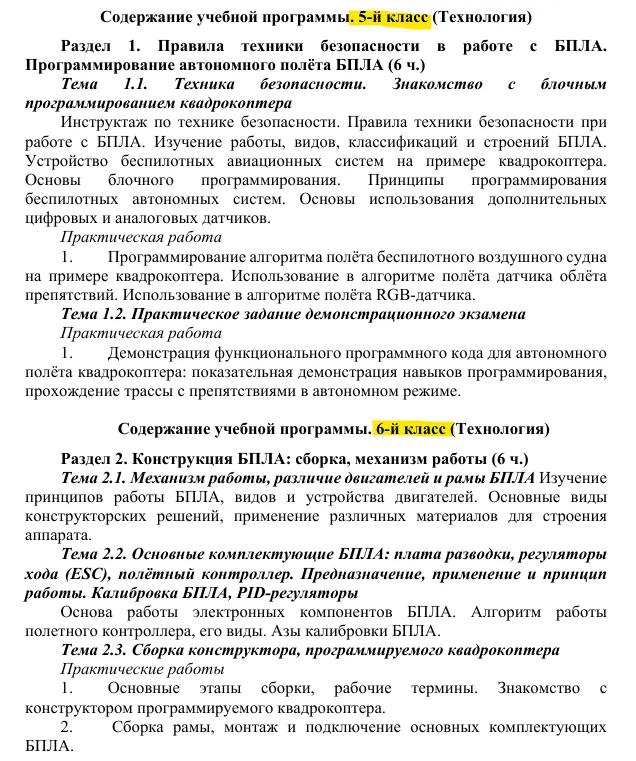
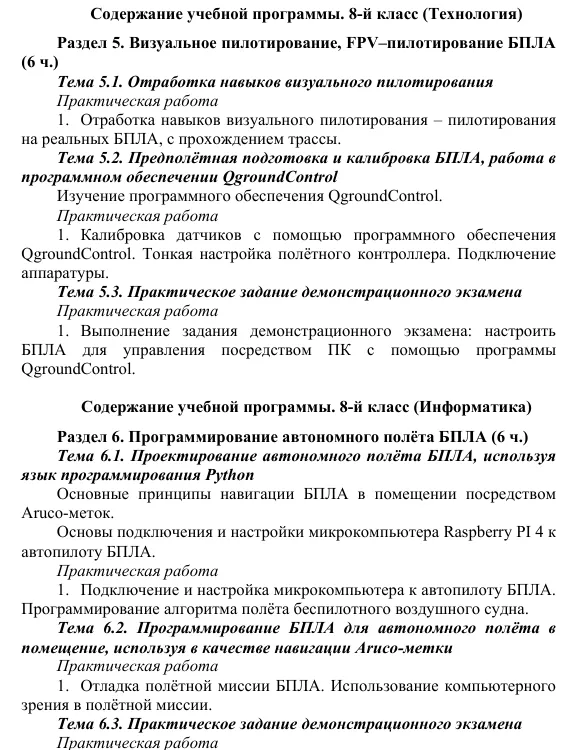
Download full document
Программа БПЛА 5-8.pdf
Equipment and Infrastructure
To provide the necessary material resources for the educational programs described above, Order No. 838 of the Ministry of Education of the Russian Federation, dated November 28, 2024, approved a list of required teaching and educational equipment for general education institutions. This document establishes updated equipment standards aimed at creating a modern, technology-oriented, and comfortable learning environment.
Requirements of Order No. 838 dated November 28, 2024 for School Equipment
According to Order No. 838, school classrooms for Technology and Fundamentals of Security and Homeland Defense are expected to include modern educational equipment, including basic training unmanned aerial vehicle (UAV) kits, flight simulation software, as well as resource kits for FPV flights and photogrammetric data processing.
To organize the educational process, schools are recommended to equip Technology (school workshop) classrooms and Fundamentals of Security and Homeland Defense classrooms with the following equipment:
- Basic educational unmanned aerial vehicle (UAV) kit.
- Flight simulation software for practicing UAV piloting skills on personal computers.
- FPV flight resource kit (a first-person-view radio-controlled aviation training system).
- Educational kit for developing different types of unmanned aerial vehicles.
- “Drone constructor” kit.
- Software for photogrammetric data processing.
- Hardware and software complex for piloting unmanned aerial vehicles.
Now, let us move on to the education provided in the upper grades.
Upper Grades
In addition to UAV instruction provided within the “Initial Military Training” course, including off-site training camps as described above, students in Grades 10–11 receive more advanced UAV-related training through the following formats:
- A dedicated course within the Technology subject. Schools may include a separate specialized course in their curriculum, such as “Unmanned Aircraft Operator” or “Unmanned Aerial Vehicles: Fundamentals of Design and Control.” These courses typically involve one lesson per week (approximately 34 instructional hours per year).
Students assemble and configure UAVs, practice manual piloting skills (initially using simulators and later with real aircraft), study the structure of different types of drones, and learn to calculate payload capacity and flight duration. Programming is also often included — for example, students write Python scripts for autonomous flight tasks or work with programming environments such as TRIK Studio.
For example:
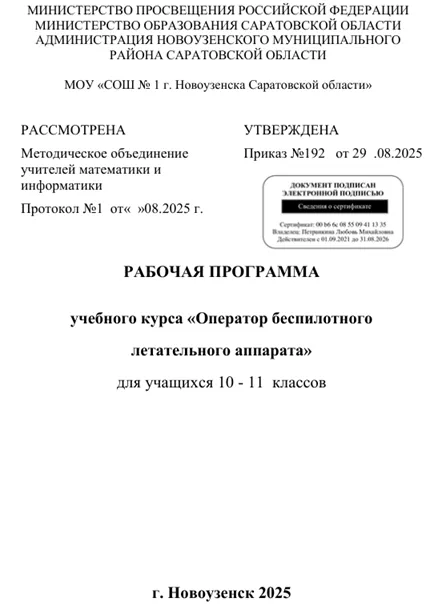
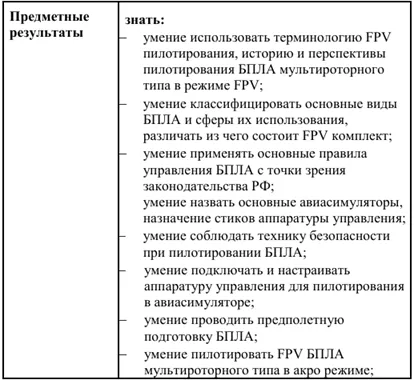
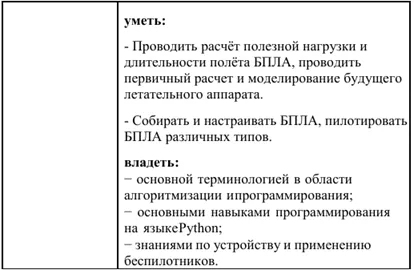
Download full document
Rabochaya_programma_po_tehnologii_BPLA_10_11_klass_dlya_utverzhde-1.pdf
- Extracurricular activity course. For example, the program “Unmanned Control Systems”.
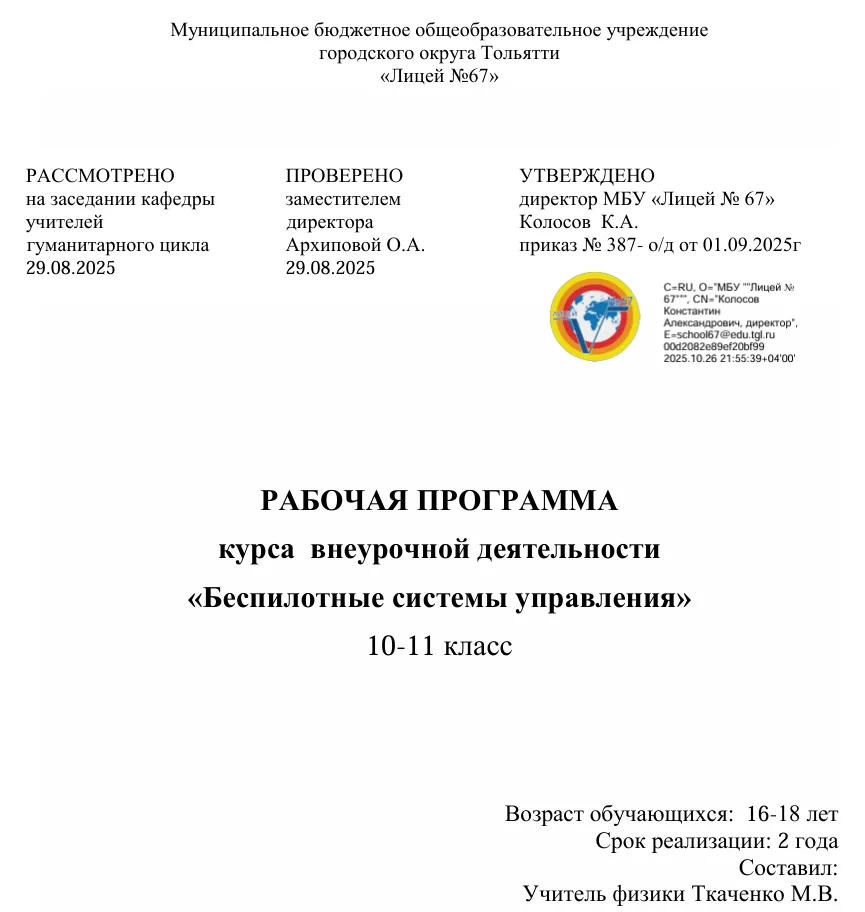
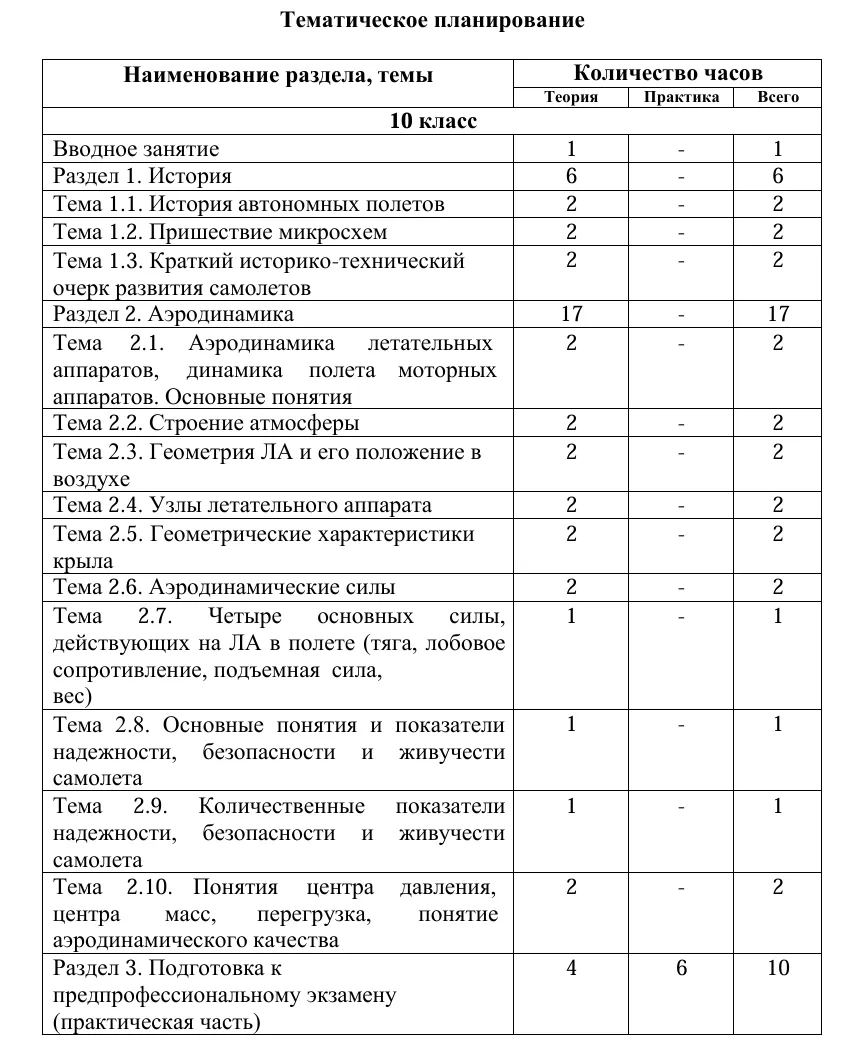
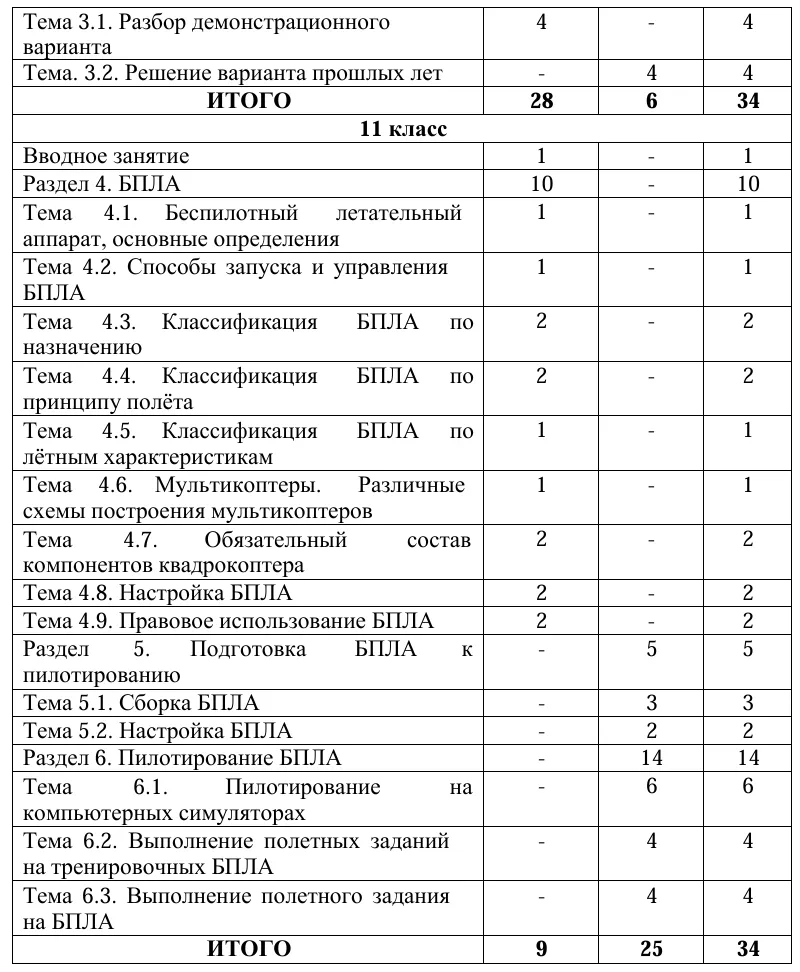
Download full document
Rabochaya_programma_kursa_vd_Bespilotnie_sistemi_10-11_klass_podpisano.pdf
- Advanced study in specialized classes. In engineering, technical, or aerospace-focused classes, UAV topics are integrated into a broader educational program. For example, within computer science or physics courses, students study control algorithms, mathematical flight modeling, and integration with geographic information systems (GIS).
- Integration with other subjects. UAV-related knowledge can also be incorporated into physics lessons (principles of aerodynamics, operation of sensors), computer science (programming and processing data from drone cameras), and even geography (the use of UAVs for aerial surveying and territorial analysis).
Conclusion
The Russian school education system introduces students to UAVs beginning at least from Grade 5, and in some educational institutions from as early as 7 years old. Currently, there is no separate standalone school subject titled “UAVs”; however, a number of methodological guidelines have been developed to integrate UAV education into existing subjects, including “Fundamentals of Security and Homeland Defense,” “Initial Military Training,” “Technology: Robotics,” and “Computer Science,” as well as through extracurricular programs described above.
More advanced UAV education begins in Grade 8, while in Grades 10–11 specialized programs provide students with the opportunity to graduate from school already possessing the knowledge and practical skills required to operate and maintain various types of unmanned aerial vehicles.
According to a statement by Russia’s Minister of Education, Sergey Kravtsov, approximately 660,000 students graduated from Grade 11 in 2026.
Even assuming that not all schools provide a complete educational pathway, from introductory UAV awareness in lower grades to advanced operator training in upper grades, the annual number of graduates with UAV-related knowledge and operational skills could still reach hundreds of thousands of trained UAV personnel.
This is a topic that deserves serious consideration.