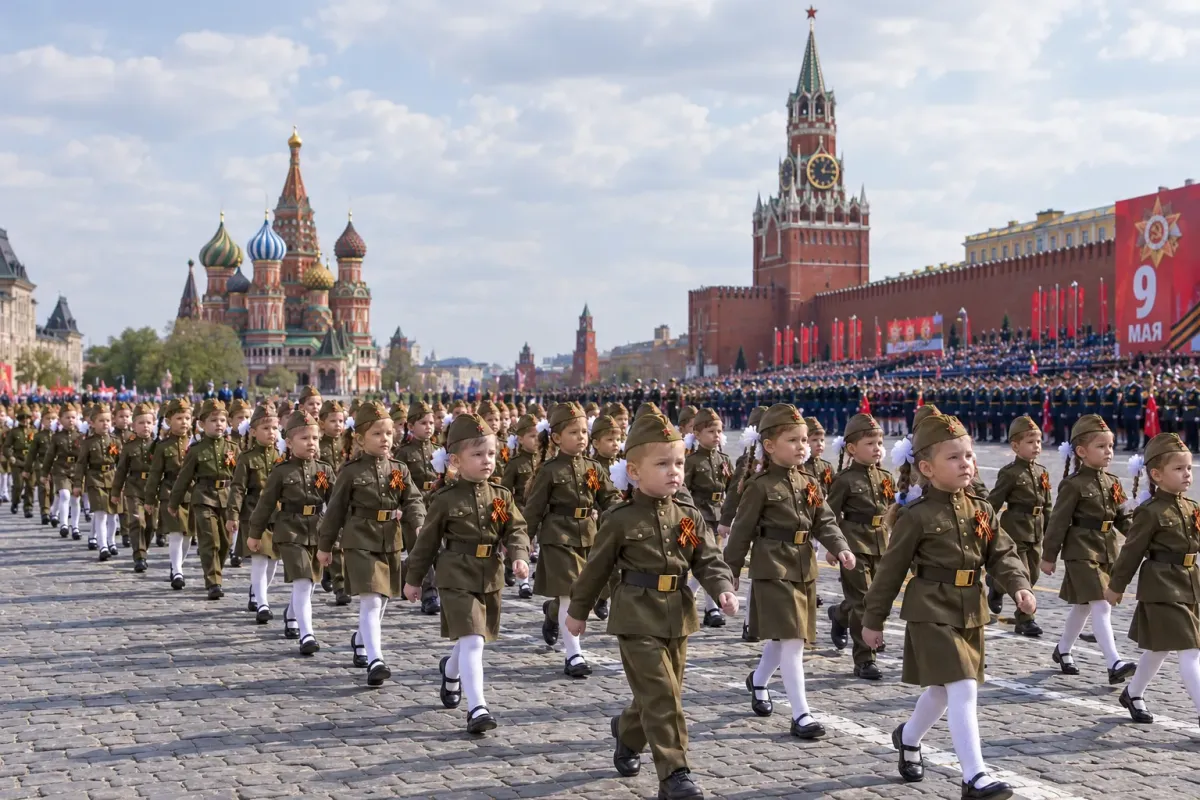
Today, Ukraine is fighting a defensive war for its freedom, independence, and the very existence of the Ukrainian nation and the Ukrainian state. No matter how difficult things may become, we will endure. Yet, in the author’s view, an even more difficult battle may lie ahead: a battle against a new generation of russians.
The russian soldiers occupying Ukraine today were educated in soviet or russian schools at a time when the very existence of Ukrainians was not yet openly denied. From an early age, they were taught that war was bad and that killing was wrong. The few remaining veterans of the Second World War who visited schools to speak to pupils told them that war was evil. And singing the words of the song “May There Always Be Sunshine” did not put anyone at risk of prosecution under the criminal code.
Imperial thinking and propaganda, of course, have not prevented russians with the “right” kind of school education from going to war and killing a “brotherly” people. However, most of today’s volunteers join the war to make money rather than out of ideological conviction, using propaganda primarily to justify and conceal their crimes.
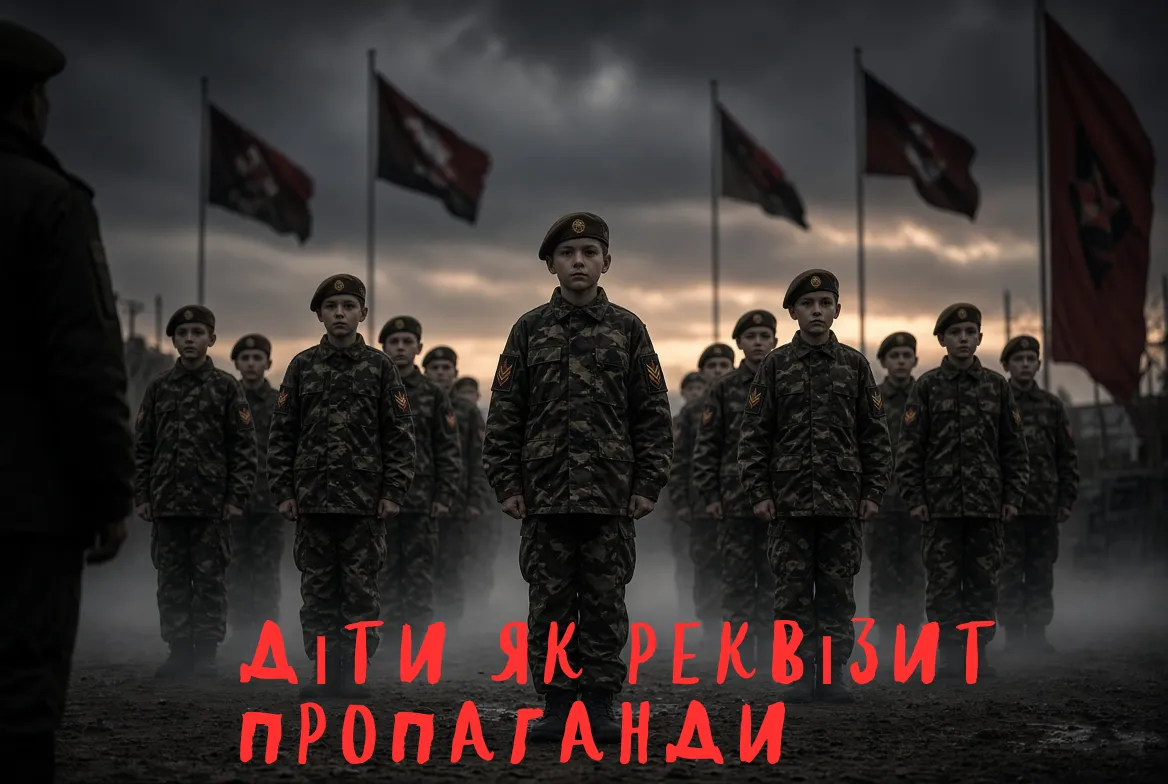
The next generation of russians, by contrast, will be raised from early childhood in an entirely different environment. They will be prepared to kill in the name of an ideology. In the author’s view, this presents Ukraine with a fundamentally different challenge.
By an order of russia’s Ministry of Education, 2026 was declared the “Year of Preschool Education in Russia.” This is no coincidence. Since 2022, russia’s education system has moved relatively quickly to reshape school curricula, introducing dedicated lessons known as “Conversations About Important Things” and publishing new history textbooks, among other measures. Now, preschool institutions must also be brought into line with the same overarching propaganda narrative.
The russian state is beginning to indoctrinate its citizens literally from their earliest years. This article examines the fundamental principles of patriotic education for children aged three and older in russian preschools.
The purpose of this article is to demonstrate that the disturbing displays of militant “patriotism” in russian preschool institutions that have come to public attention, such as children kneeling with the letter Z, are not merely the result of individual educators’ idiocy or isolated cases of local excess. rather they are part of a much broader ideological machinery set in motion by the russian state.
General Principles of Preschool Education
According to the Russian Ministry of Education’s 2023 Methodological Recommendations on the Implementation of the Federal Preschool Education Programme, the objectives of the educational programme include:
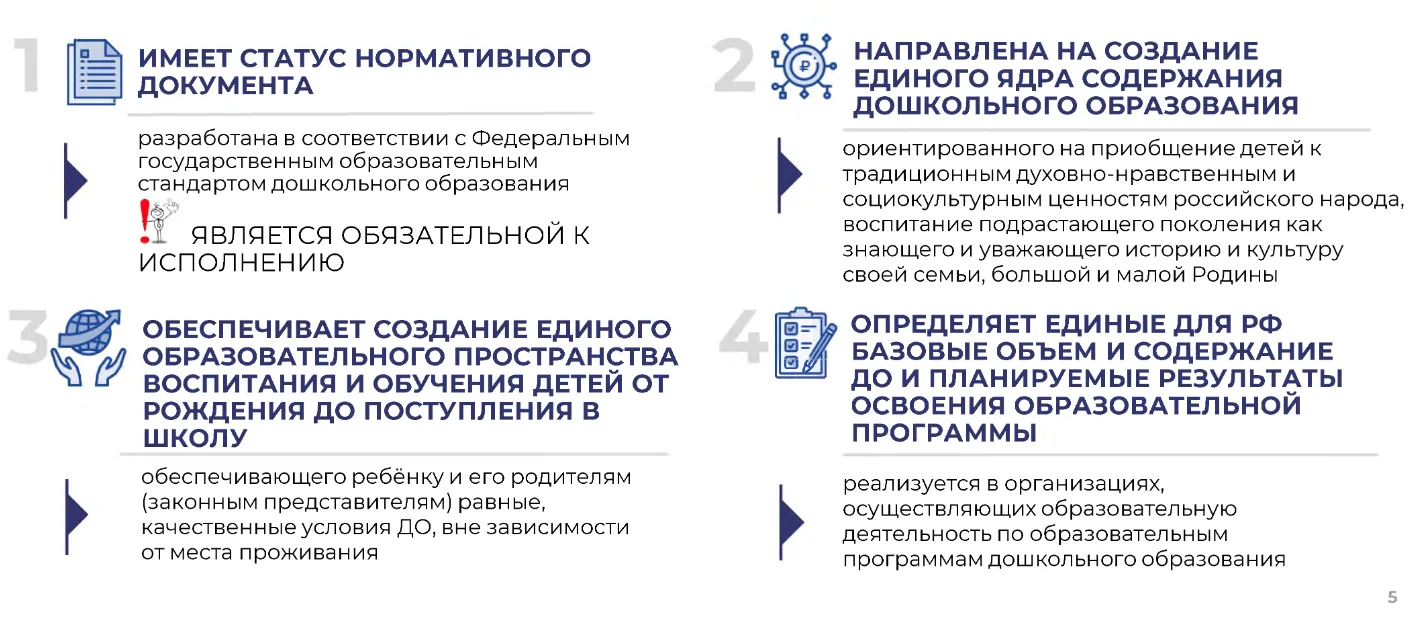
Educating and raising preschool-aged children as citizens of the Russian Federation and laying the foundations of their civic and cultural identity through age-appropriate content and accessible methods;
Establishing a unified core curriculum for preschool education aimed at introducing children to the spiritual, moral, and sociocultural values of the Russian people, and raising the younger generation to know and love the history and culture of their family, their immediate homeland, and their broader homeland;
Creating a unified federal educational environment for the upbringing and development of children from birth until they enter general education, ensuring equal access to quality preschool education for children and their parents (legal guardians), regardless of their place of residence or region.
Thus, the aforementioned objective of introducing children to the “spiritual and moral values” of the Russian people is an integral part of the educational process, which begins from the moment a child is born.
At the age of three, patriotic education begins, becoming an integral part of the educational process all the way through to the end of school.
Методические_рекомендации2.pdf
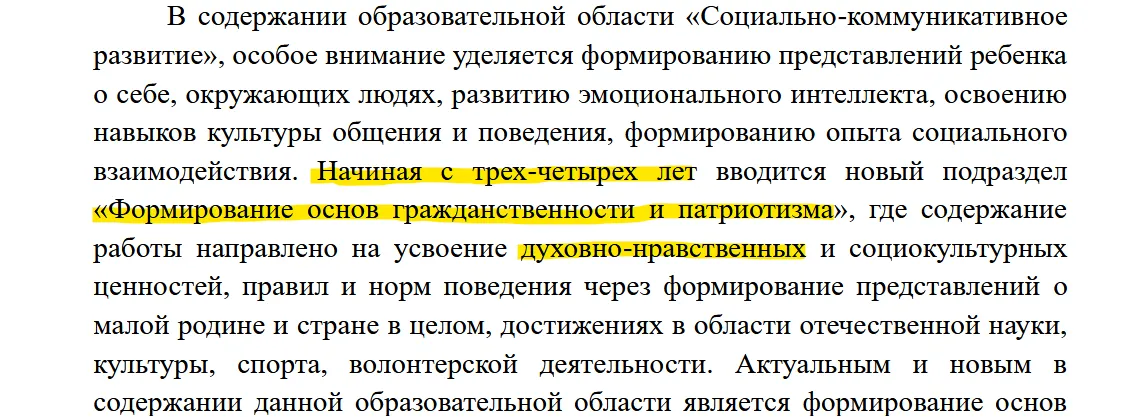
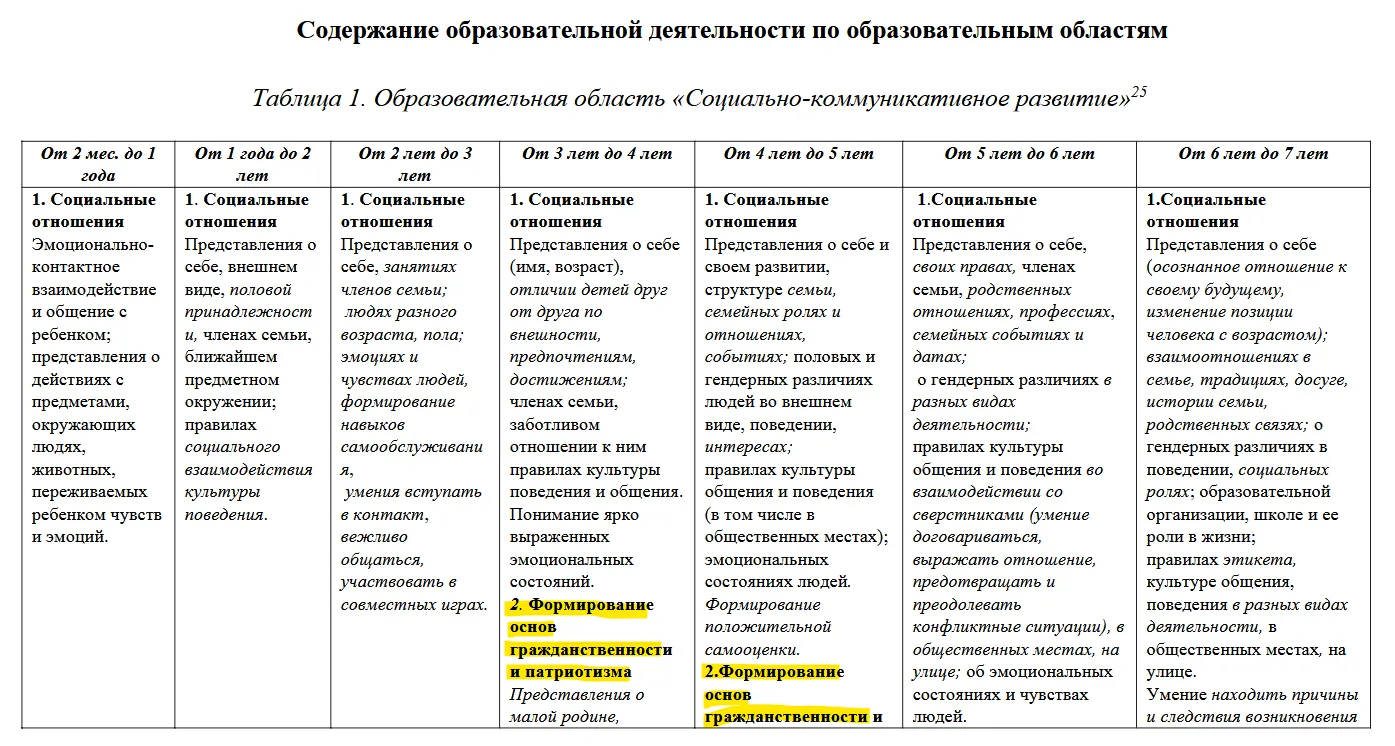
Further, more detailed preschool education programs and guidelines are developed on the basis of these recommendations. One example is a framework that, in addition to the objectives outlined above, identifies the following priorities:
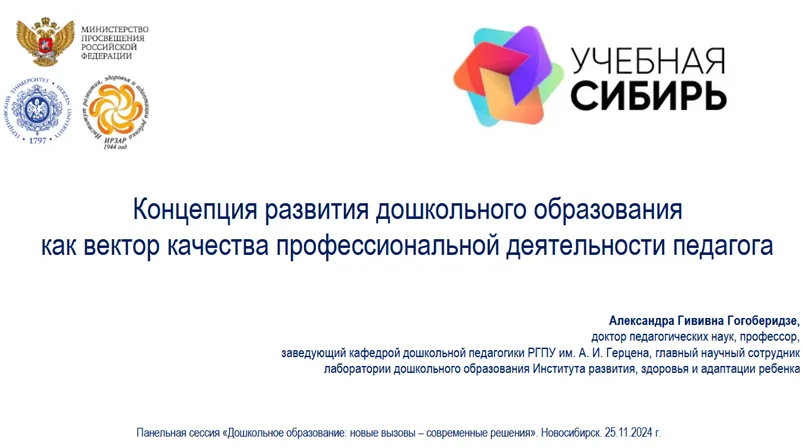
A safe digital environment with verified content;
A unified approach to education and upbringing across preschool and primary education;
Educational outreach programs for parents.

Методические_рекомендации3.pdf
Conclusions
New standards and methodologies are being introduced in Russian preschool institutions to establish a prescribed and controlled system of child-rearing beginning at the age of three. This system is designed to be integrated into a unified framework of childhood education and upbringing.
Moral and patriotic education occupies a central place in this framework. It is introduced from the age of three and, in essence, is intended to continue throughout the entire period of preschool and school education.
General principles of patriotic education
The main practical and guiding documents governing preschool education in Russia include:
Federal Work Programme for Upbringing
федеральная рабочая програма.pdf
Foundations of Patriotic Education for Citizens of the Russian Federation: Methodological Recommendations
Основы патриотического воспитания.pdf
Directive Approving the Action Plan to Improve the Effectiveness of Upbringing in Institutions Implementing Preschool Education Programmes Through 2030
plan-vospitaniya-doo-do-2030.pdf
According to these and other regulatory documents, the concept of patriotism is primarily framed in terms of “service to the Fatherland and defense of the Motherland.” Naturally, these documents also incorporate familiar elements of Russian state propaganda.


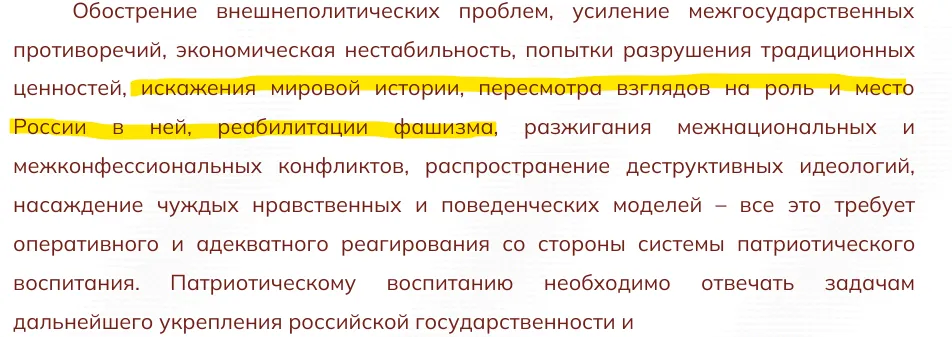
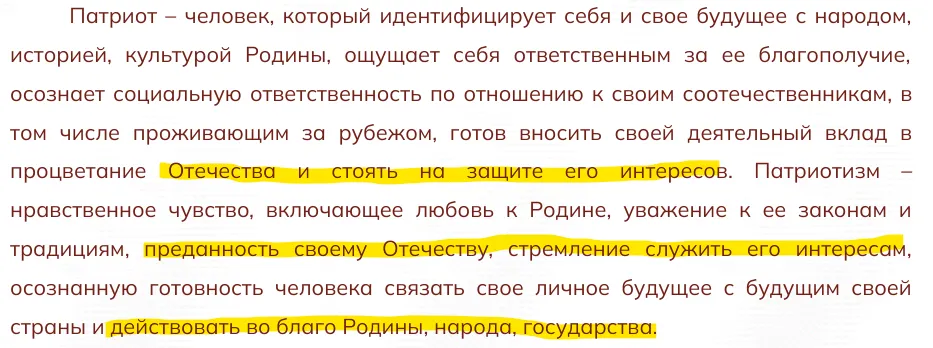
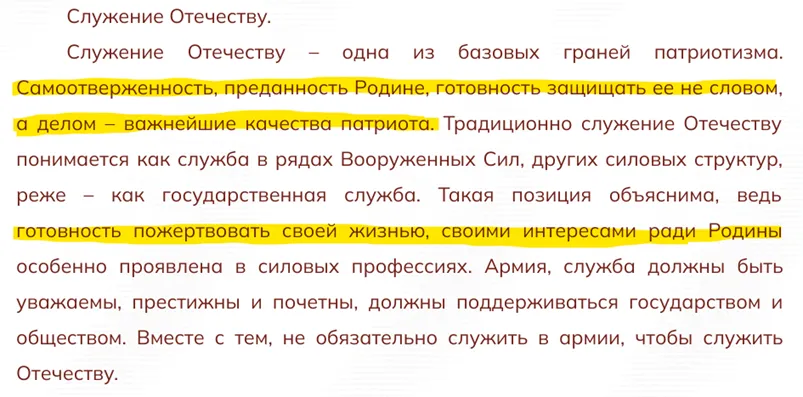
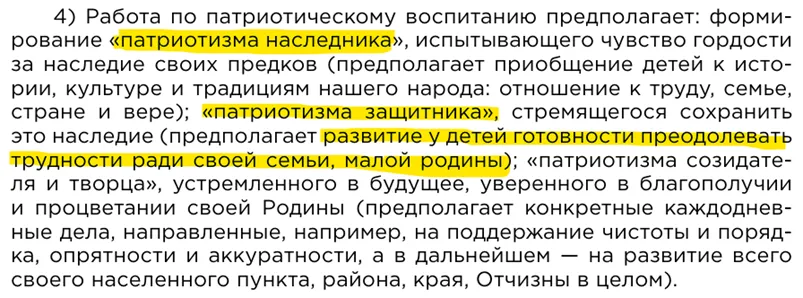
From the earliest age, children are to be conditioned to accept the idea of sacrificing their own lives for the “interests of the Motherland.”
Conclusions
The guiding documents used as the basis for developing patriotic education programmes in Russian preschools place the main emphasis on defending the Motherland and its interests, exploiting the memory of the “Great Patriotic War,” instilling in children a willingness to make sacrifices — including the ultimate sacrifice of their own lives — and fostering a sense of duty to serve the Fatherland.
Preschool patriotic education programs
This section presents several approved working programs designed for preschool teachers in kindergartens, covering different age groups. The full versions of these programs are available for download and independent review. The author will focus on quoting only the key passages relevant to the subject of this article.
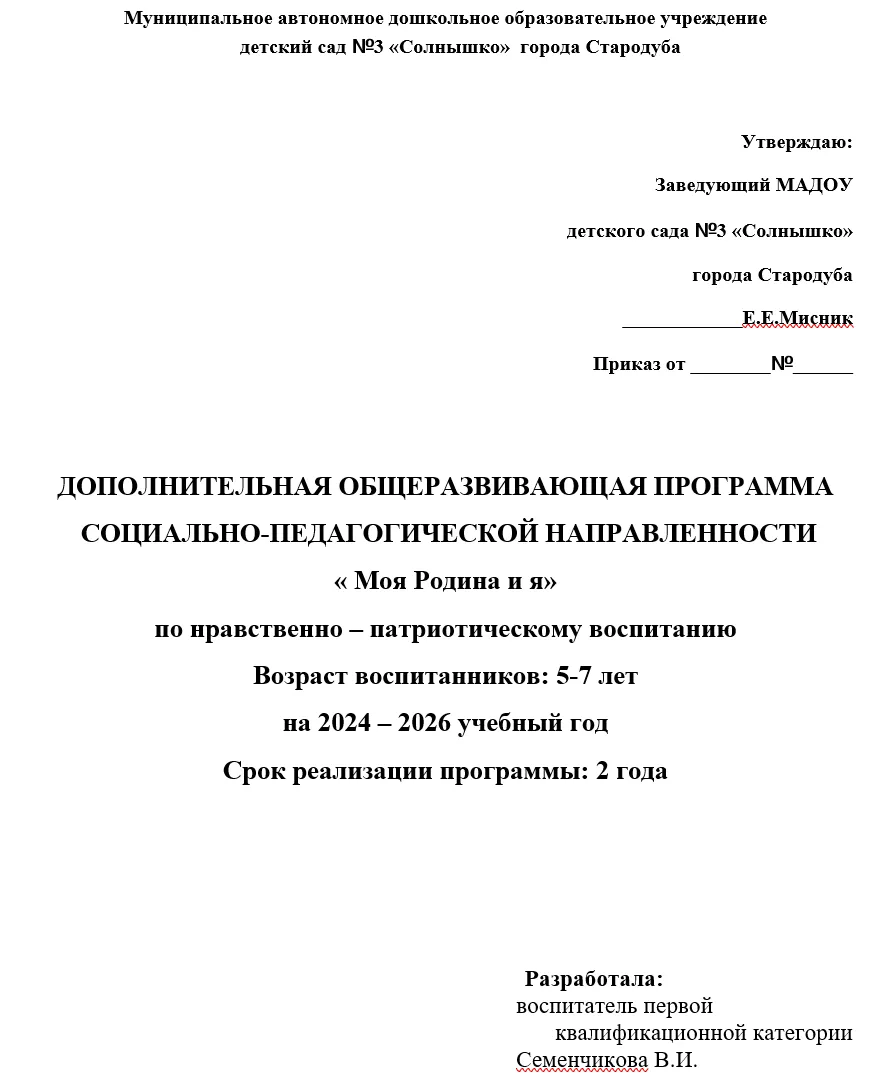
Supplementary general development program in the Socio-Pedagogical Field: “My Motherland and I”
Моя Родина и я.docx
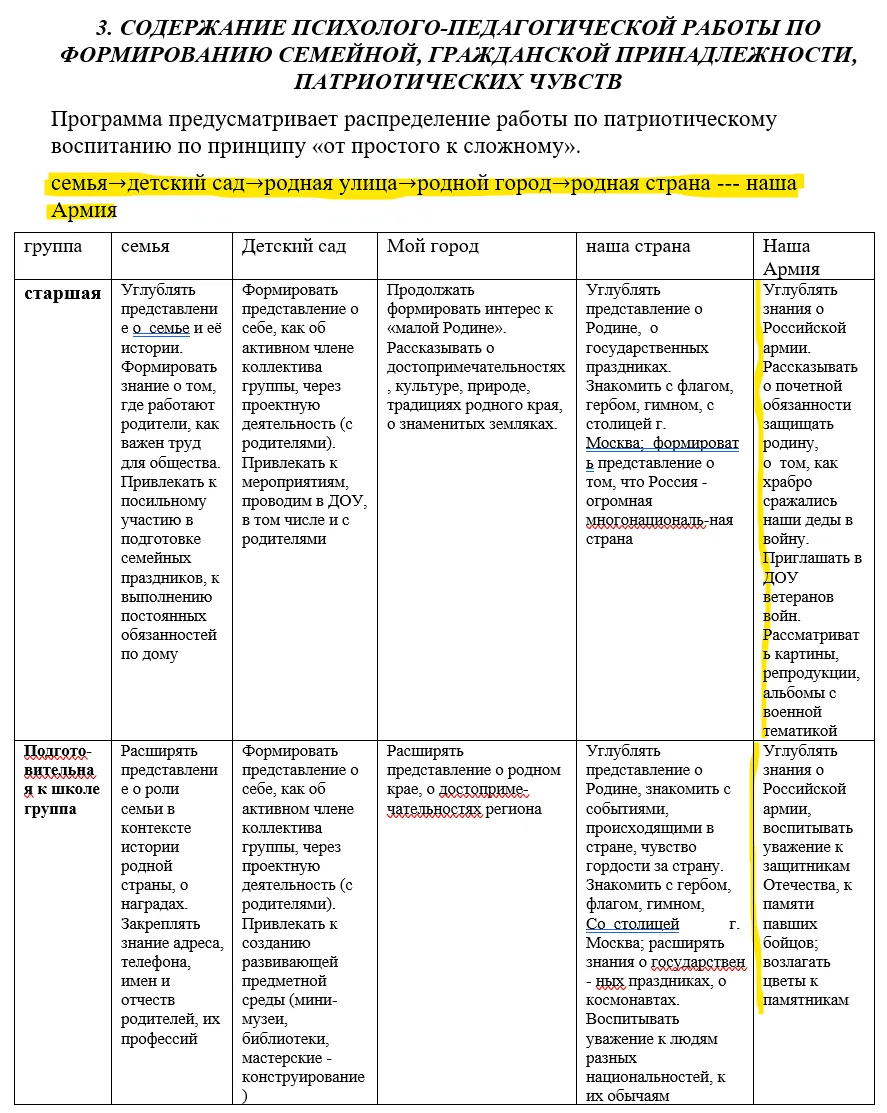
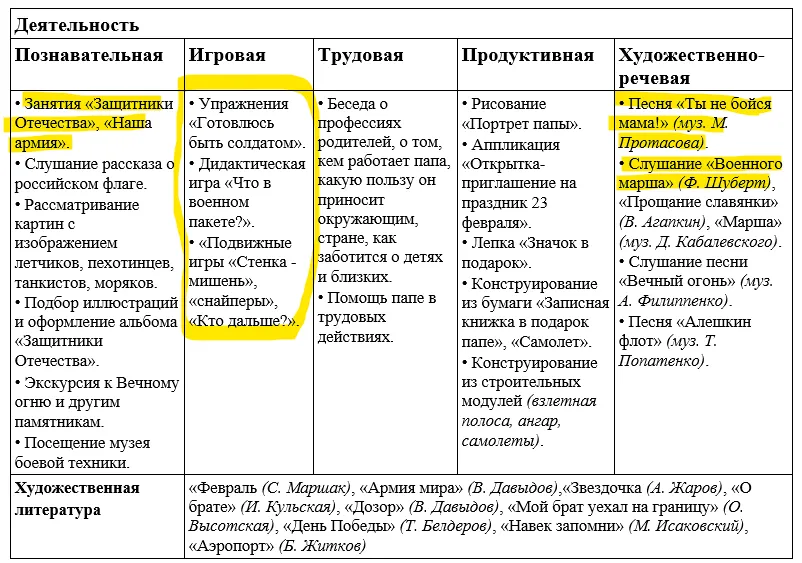
The author assumes that not everyone is familiar with the lyrics of the soviet-era song “Don’t Be Afraid, Mama” (Ty ne boysya, mama), so they are reproduced below:
I have a sailor suit. I have a sabre, too.
Mum bought me a swift horse.
Hey, forward, boys!
Draw your sabres!
Don’t be afraid, Mama,
Of anyone.
Behind my bed, an engine roared,
An armored personnel carrier rolled across the floor.
Shells are falling,
A battle has begun.
Don’t be afraid, Mama,
I’m with you!
There’s a rocket on the table —
The enemy cannot get through.
Our aircraft guard the skies.
The sun will never cease to shine,
The garden will never perish.
Don’t be afraid, Mama,
I’m a soldier!
I’ll grow up like Dad,
And years will fly by.
People will abolish wars forever.
May our kind planet Earth never know sorrow.
Don’t be afraid, Mama,
I’m with you!
Key themes conveyed by these programs:
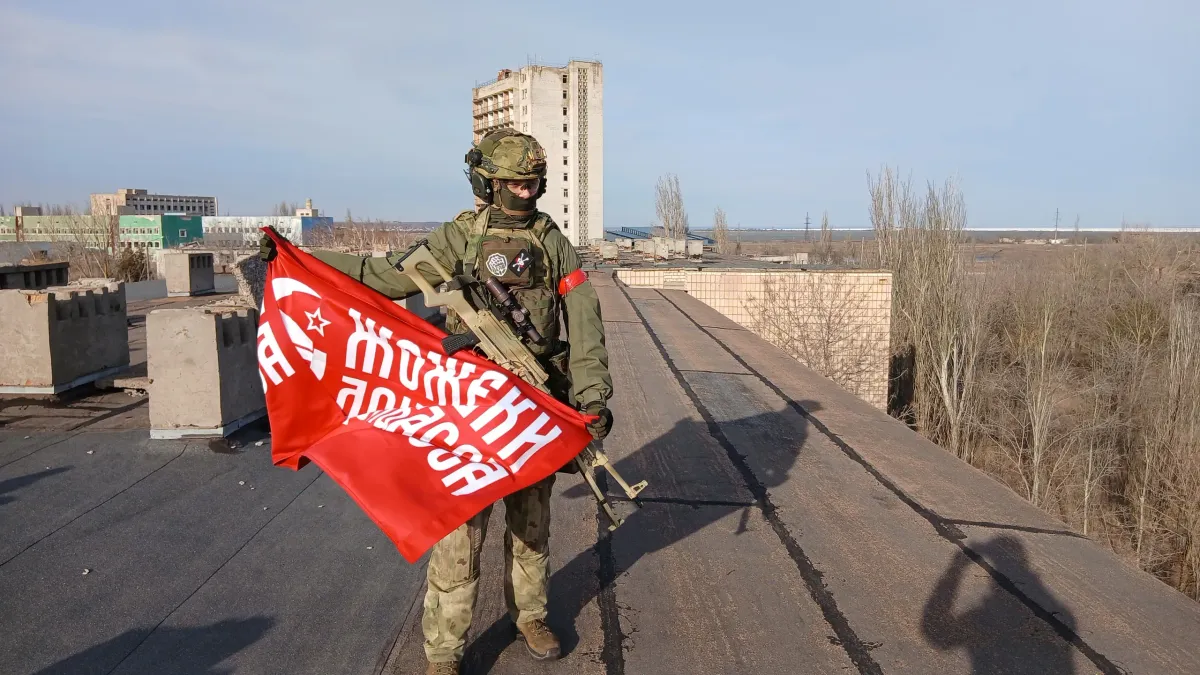
Equating veterans of the WW2 with participants in russia’s so-called “special military operation” (the war against Ukraine).
Instilling the idea that being a soldier is a good and honorable thing.
Presenting military service as the highest expression of patriotism.
Patriotic education of older preschool-age children in the kindergarten educational process: a methodological guide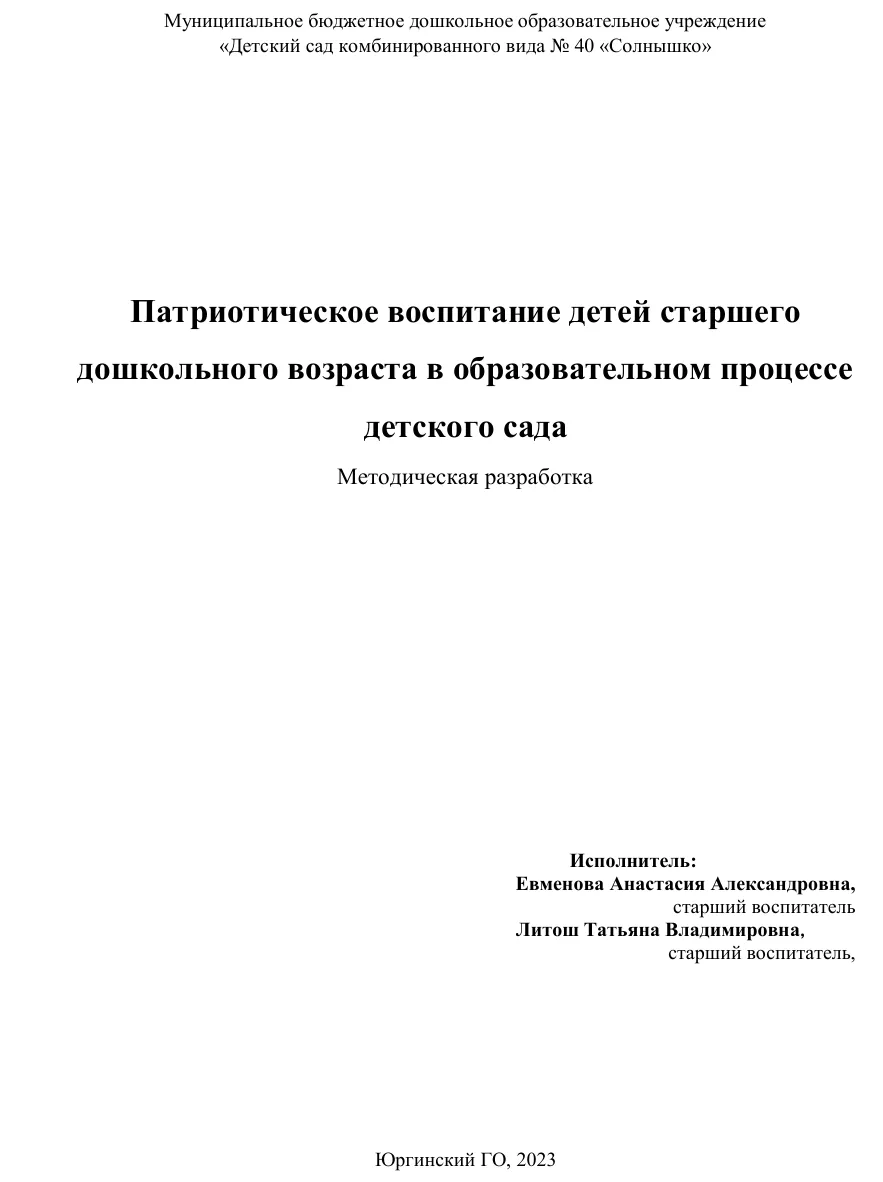
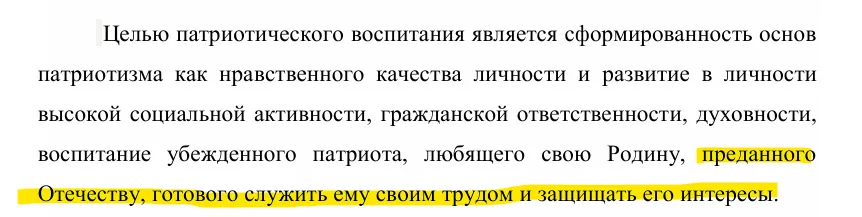
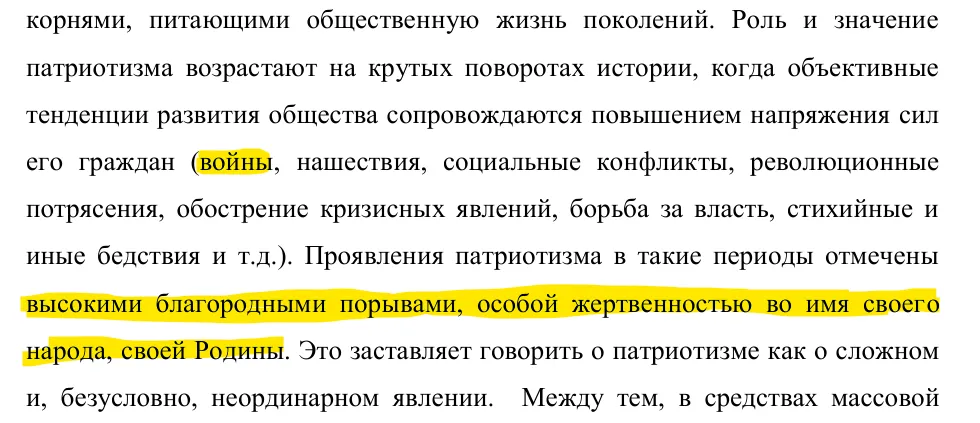
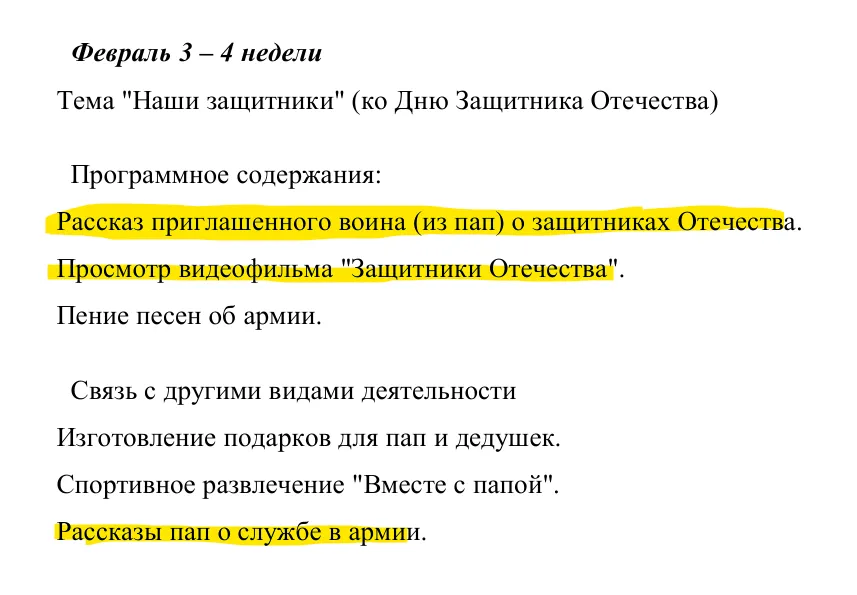
Other programs - download
My_vmeste.pdf
Родничок_блок_print.pdf
ja-rossijanin.pdf
Методическая-разработка-Патриотическое-воспитание-2.pdf
PROGRAMMA_PATRIOTIChESKOGO_VOSPITANIYa.pdf
PROGRAMMA_YuNARMIYa_DOShKOL_NIKOV.pdf
programma-po-patrioticheskomu-vospitaniju-doshkolnikov-rastim-nastojashhih-patriotov.pdf
kcp_patriot.pdf
program_patriot_vospitanie2.pdf
Examples of russia’s state policy on patriotic education in preschool institutions
Having examined the fundamental principles, methodological recommendations, and working programs governing patriotic education in preschool institutions, let us now look at how these policies are implemented in practice. The following section presents work plans, reports on patriotic education activities, and other examples illustrating their implementation.
"Patriotic education of older preschool-age children through the example of heroes and ordinary soldiers of the “Special Military Operation” Municipal budgetary preschool educational snstitution, Kindergarten No. 100 “Snow White,” Yakutsk.
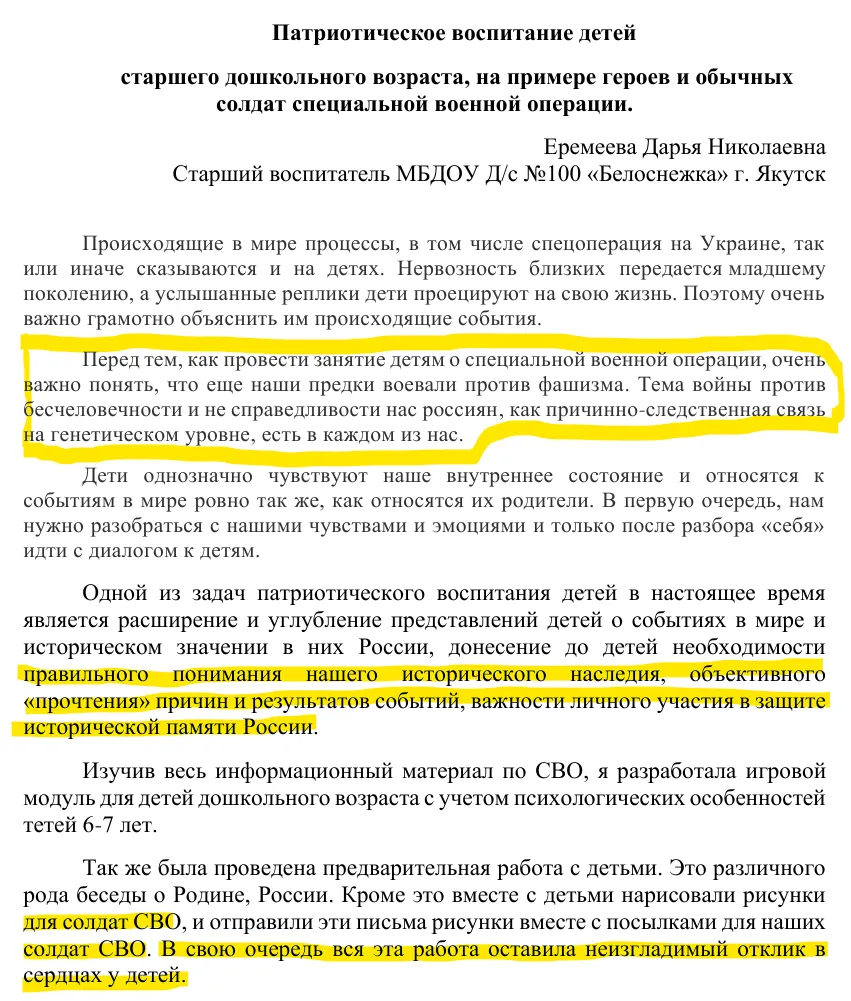
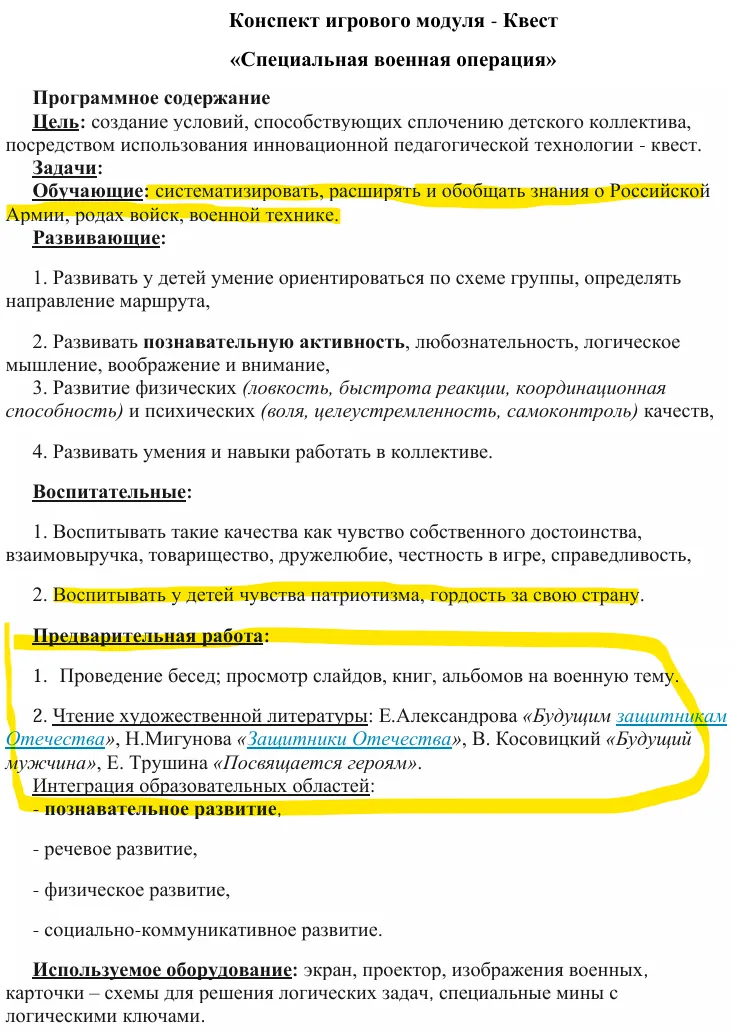
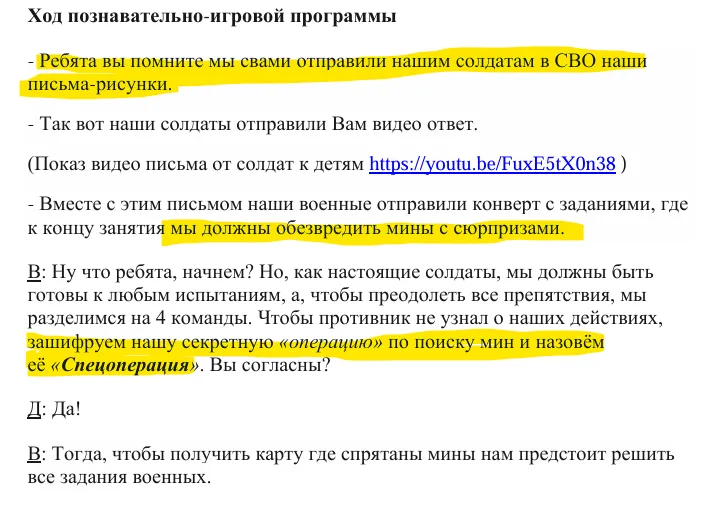
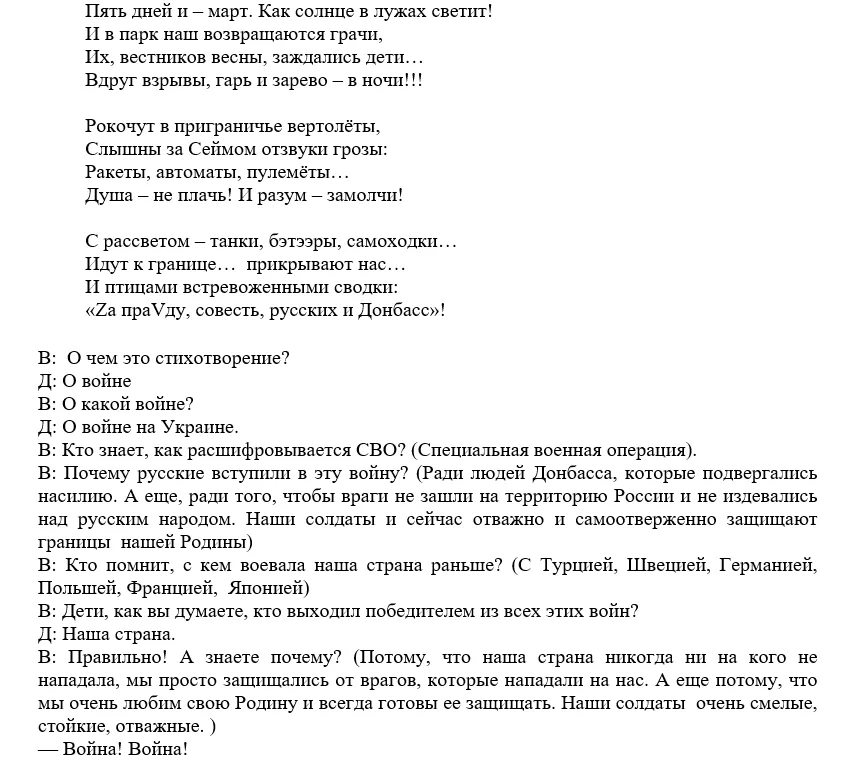
Of course, the children’s understanding of the so-called “special military operation” is based entirely on Russian state propaganda:
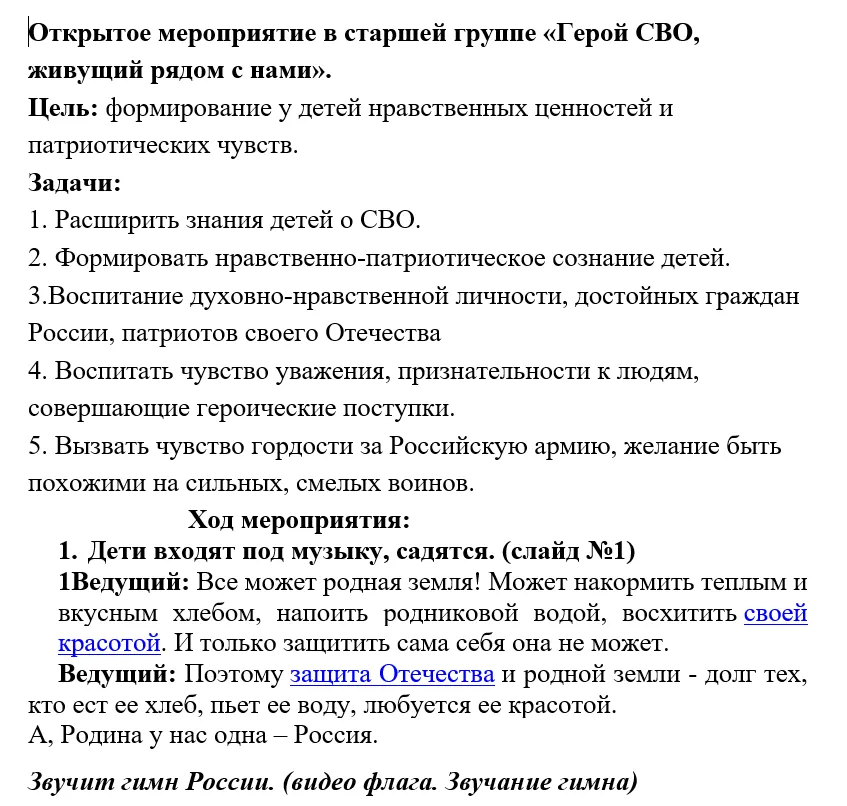
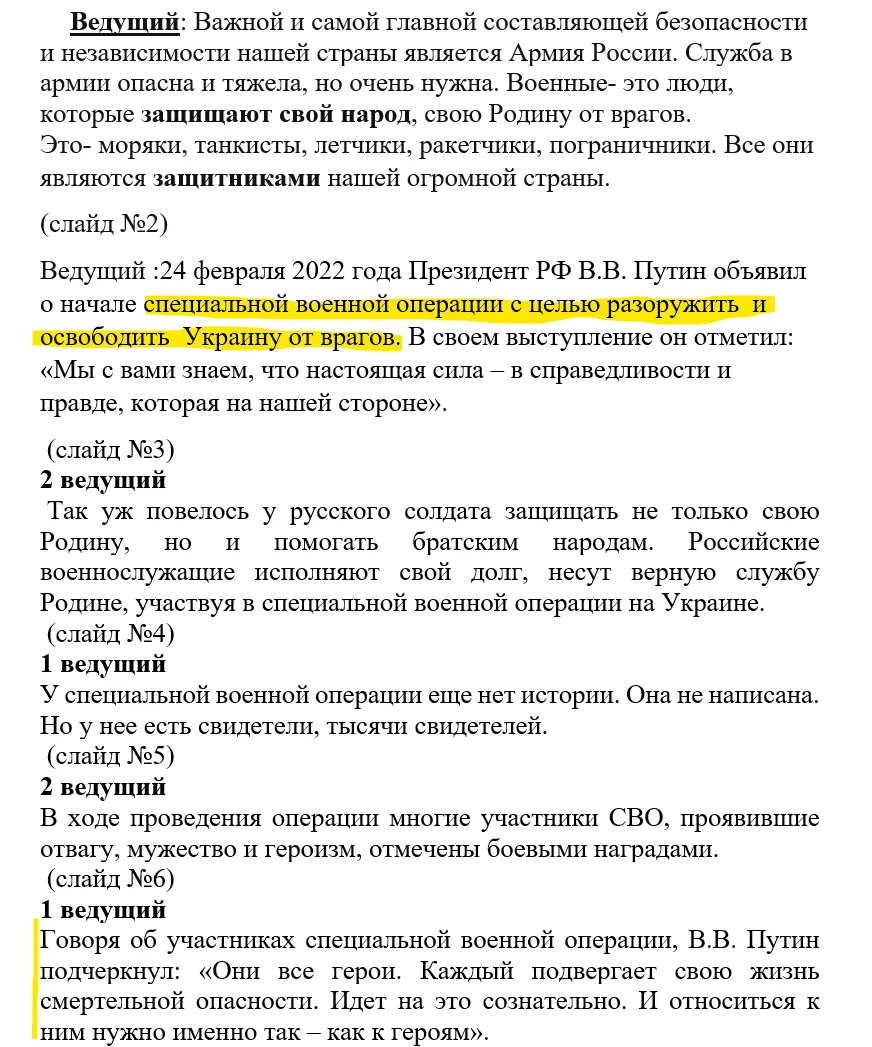
The glorification of participants in Russia’s so-called “special military operation” is the central theme underpinning virtually all “patriotic” activities in Russian kindergartens.
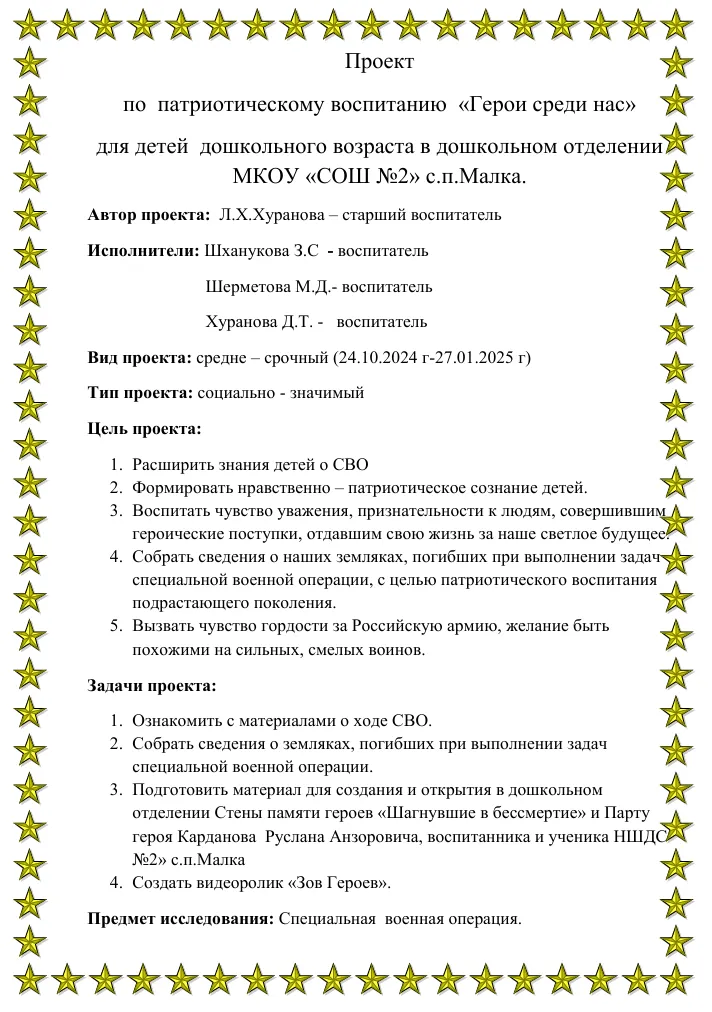
The extent to which activities related to the so-called “special military operation” feature in preschool institutions varies. In some kindergartens, they may be limited to events marking "defender of the Fatherland Day in February. In others, however, such activities take place every month as part of a year-long program.
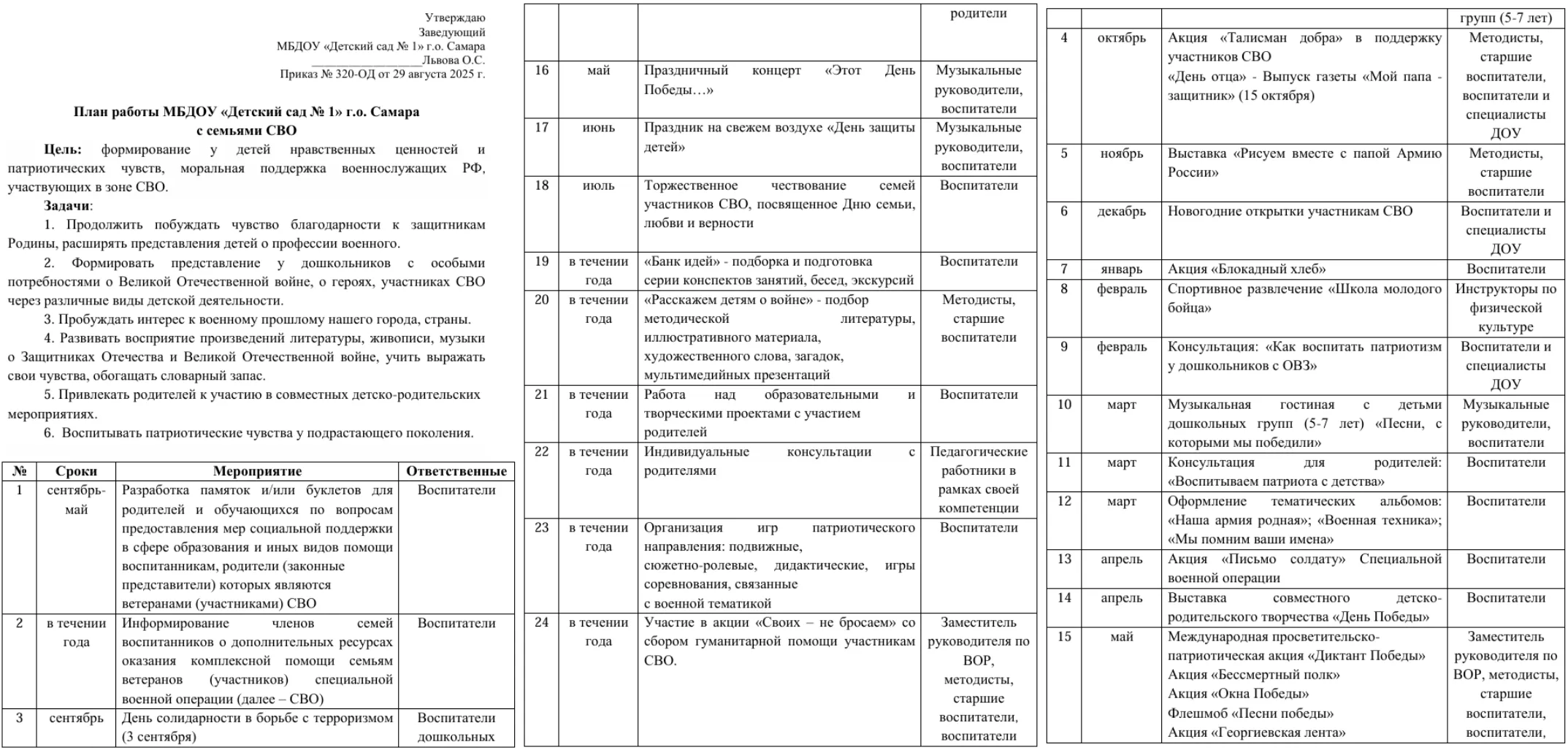
Квест-7 ноября _День воинской славы _.pptx
regionalnaya_patrioticheskaya_aktsiya.docx
Конспект игрового модуля - Квест «Специальная военная операция»Белоснежка.pdf
shagnuvshie_v_bessmertie.pdf
Сценарий квеста к 23 февраля Защитники страны для старшего дошкольного возраста.doc
План-мероприятий-с-СВО.pdf
proekt_o_svo_v_do.pdf
slava_armii.doc
stsenariy_svo.docx
ood_rasskazhite_detyam_o_voyne.docx
Conclusions
When I began writing this article, I had planned to include a lengthy conclusion covering all the details and the central argument of the piece. Instead, I will leave you with a brief summary.
In Russian kindergartens, children are taught that they must be prepared to die for their Motherland. Through play, they are groomed for future military service, while “heroes” of the so-called “special military operation” personally tell them how they killed Ukrainians. And all of this takes place at an age when children are only beginning to understand the difference between good and evil.
P.S…